Guide 7 min read
Custom Industrial Table: How to Choose the Right One?
The table is the most defining piece of furniture in any interior. It is where you eat, work, entertain and live. In an industrial style setting, it also becomes the focal point of the room, the piece that sets the tone for the entire space. But between solid steel industrial tables, raw wood tops on metal bases, reclaimed factory models and metal-effect wood tables, the options are wide and the pitfalls many.\n\nThis guide helps you define exactly what you need, based on your intended use, your space and your budget.
Dining table, coffee table or work desk?
The first criterion is not aesthetic, it is practical. Daily use dictates the dimensions, height, required sturdiness and the right type of finish.
The industrial dining table
This is the centrepiece. It needs to accommodate plates, glasses, elbows, children and dinners that go on for hours. Standard dimensions for 6 people: 180 cm long, 90 cm wide, 75 cm high. But a bespoke approach lets you adapt precisely to your dining room, a 163 cm table to fit between two walls, or a 240 cm table for larger gatherings.
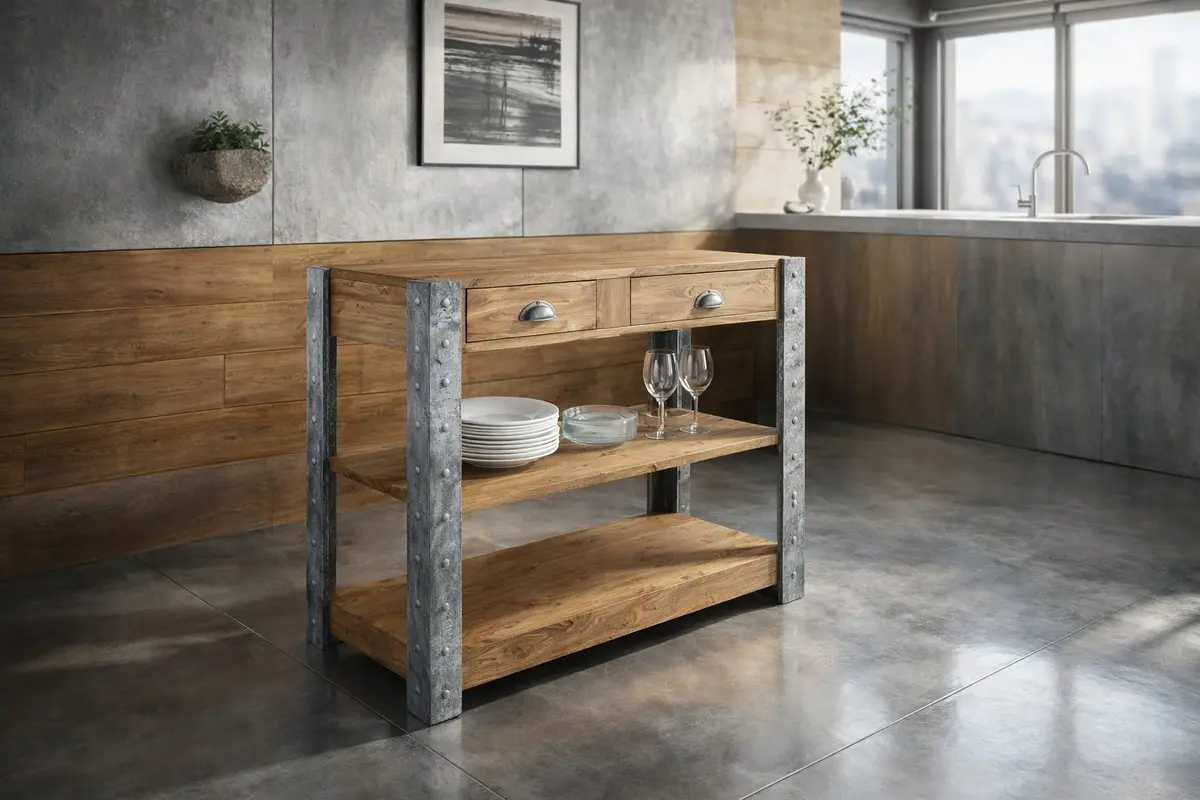
The top must be resistant to stains, scratches and heat (a hot dish placed directly on it). Solid wood protected by an appropriate varnish meets these requirements perfectly. The base determines the style: straight legs in an industrial frame structure, trestles, an X or cross-shaped central base, or a rectangular workshop-bench chassis.
With a metal-effect finish, the top can have a brushed steel or aged zinc appearance while retaining the warmth and everyday comfort of wood, no cold surface under your forearms in winter, no metallic resonance when you set down a glass.
The industrial coffee table
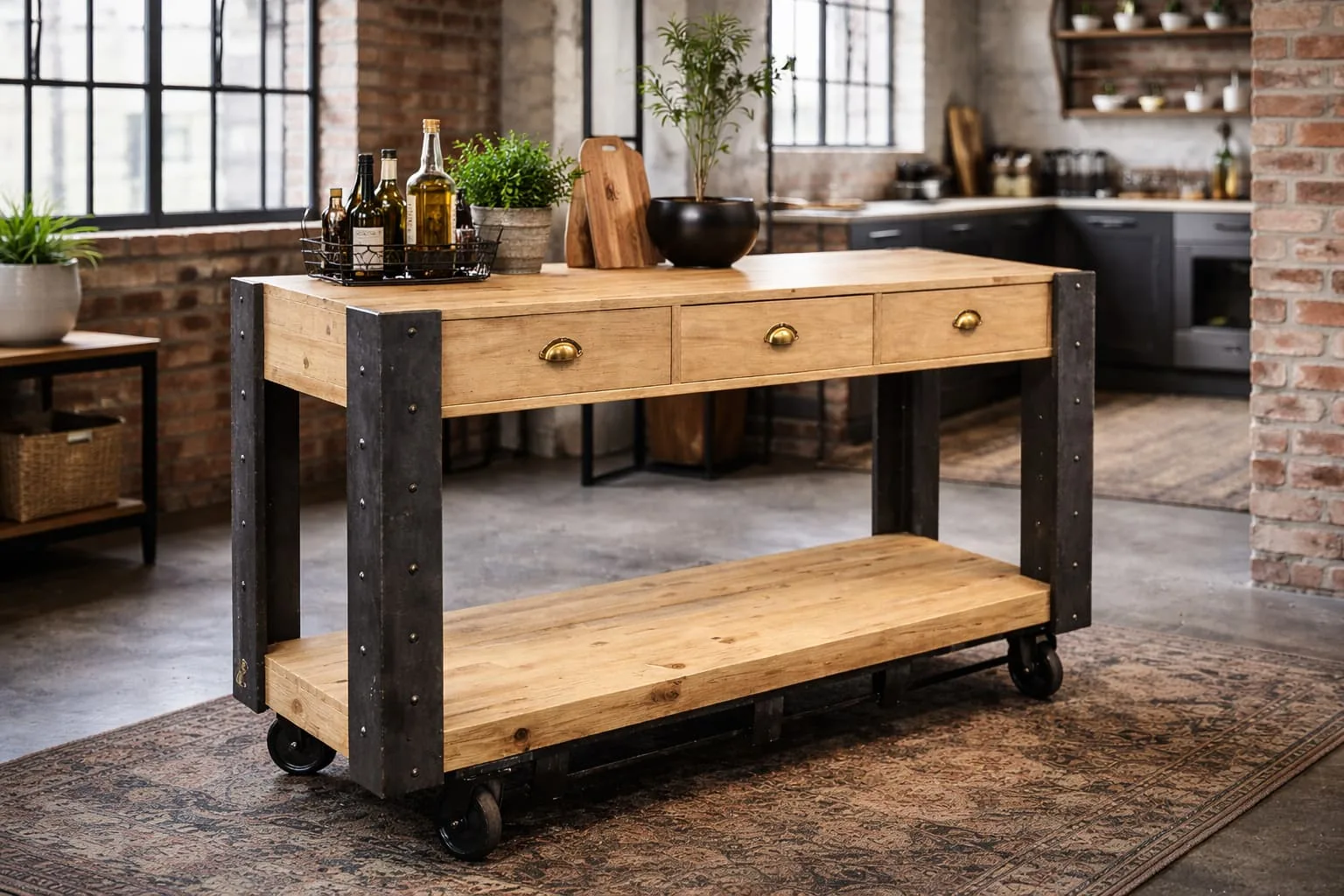
The coffee table is the centrepiece of the living room. In an industrial style, it plays on contrasts: a raw or patinated solid wood top on a metal-effect base, or conversely a steel-effect top on turned wooden legs. Classic dimensions: 100 to 140 cm long, 60 to 80 cm wide, 40 to 45 cm high.
The advantage of a bespoke coffee table: you choose the exact height relative to your sofa (a 5 cm difference dramatically changes ease of use) and the dimensions that leave enough room to move around your living space. Standard models impose their proportions on your room, bespoke does the opposite.
The work desk / industrial office desk
The industrial desk has been in strong demand since working from home became widespread. A large top in steel-effect wood, sturdy legs, optionally a drawer or a lower shelf: the industrial style lends itself perfectly to a home office thanks to its clean, functional aesthetic.
Recommended dimensions for a comfortable desk: 140 to 180 cm long, 70 to 80 cm wide, 75 cm high. The top must be perfectly flat (essential for writing or using a mouse) and resistant to everyday micro-scratches.
The key selection criteria
The top: which material and finish?
The top is the surface you see and touch the most. Three main options in an industrial style:
Natural solid wood. Oak, old pine, mango wood, reclaimed timber. The top keeps its wood appearance, grain, knots, imperfections. This is the classic choice for industrial style: raw wood on top, metal (or its illusion) below. Maintenance requires oiling or re-varnishing every 2 to 3 years depending on use.
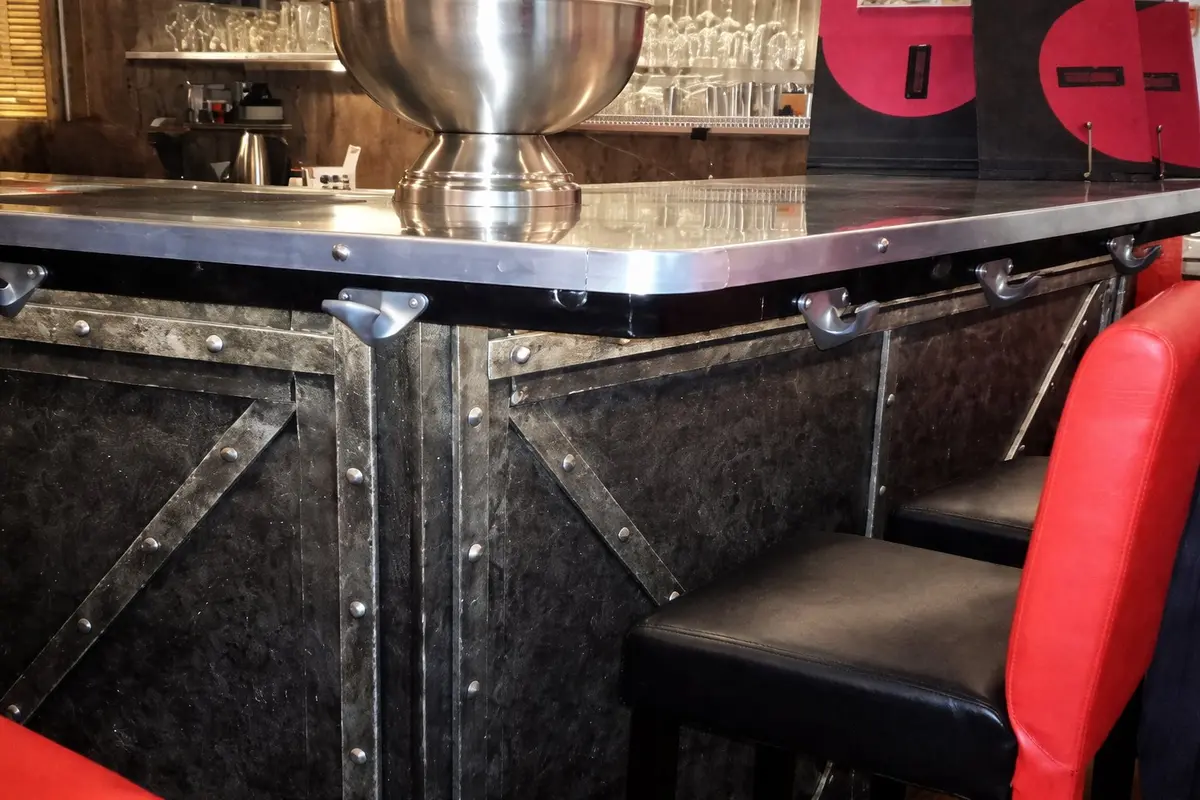
Full metal-effect wood. This is our speciality at Sel d'Embrun. The wooden top is hand-painted with a metal-illusion finish, brushed steel, aged zinc, corten rust. The result: a table that looks entirely made of metal but retains the warmth, manageable weight and comfort of wood. The protective varnish makes maintenance minimal.
Mixed top. Part of the top left as visible raw wood, the other part in a metal effect. Or a wood top framed by a perimeter band in a steel effect. This combination creates a visually rich interplay of materials and allows you to calibrate how industrial the table feels.
The base: structure and style
The base defines the silhouette of the table and its stylistic character. The main types:
Straight structural legs. Four legs in a square, rectangular or IPN profile connected by stretchers. The most understated and versatile option. It evokes the workshop workbench or the industrial canteen table.
X-frame base. Two legs crossed in an X at each end of the table. More design-forward and contemporary. It frees up legroom and makes it comfortable to sit at the ends, a practical advantage that is often underestimated.
Trestle base. Two A-frame trestles support the top. The most raw, most "factory workshop" option. Very effective in a large space or loft. Less suited to small dining rooms as trestles take up more floor space.
Central base. A single central foot (column, cross or disc) supports the top. The ideal choice for round tables or small bistro-style tables. The aesthetic evokes industrial café tables or workshop guéridons.
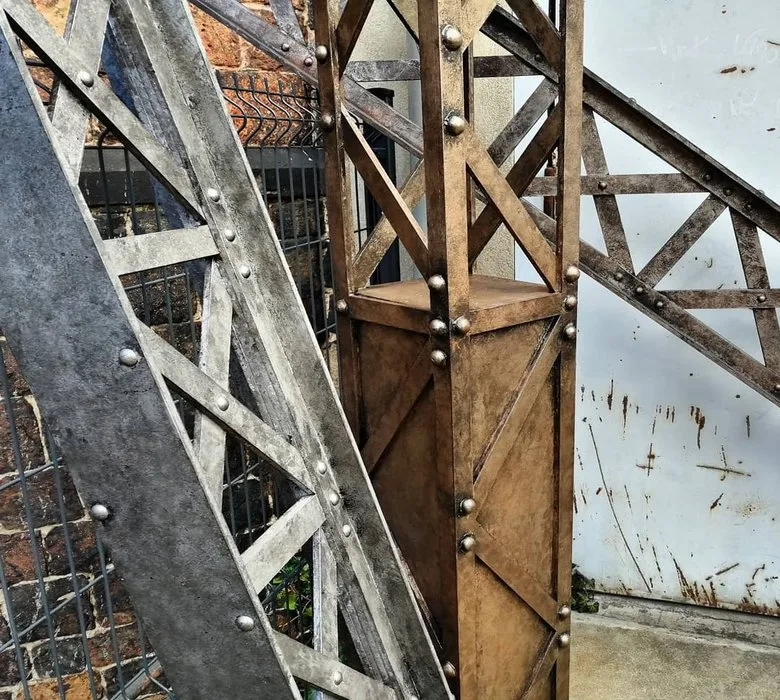
All of these bases can be made in metal-effect wood, with the same realism as our beams and furniture. The illusion is all the more convincing on a base, since people rarely inspect a table leg up close.
Dimensions: bespoke or standard?
Going bespoke is the most intelligent choice for a table, and here is why. A table that is too large for a narrow dining room makes it impossible to circulate. A table that is too short for the number of diners creates discomfort at every meal. A table that is too high or too low relative to the chairs strains the back over time.
The basic rule: allow 60 cm of width per person seated. Add 20 cm at each end for the comfort of guests sitting there. Measure the available space, leaving a minimum of 80 cm between the table and walls or furniture so you can push back a chair and move around. These simple calculations determine the ideal dimensions of your table, and it is rare for them to correspond exactly to a standard model.
Industrial table: real metal or wood illusion?
The question comes up every time. Here are the decision factors specific to tables:
A dining table in solid steel weighs between 60 and 120 kg depending on dimensions. It does not move, an advantage for stability, but a drawback for everything else (delivery, cleaning, rearranging the room). A steel top is cold to the touch in winter. The sound is metallic when you set down crockery. And the price sits between 2,000 and 5,000 euros for bespoke artisan work.
The same table in metal-effect wood weighs 20 to 35 kg. You can move it to vacuum underneath. The top is pleasant to the touch all year round. Sound is absorbed. And the budget is cut by two to three for an equivalent visual result. For a cohesive industrial decoration project, the budget saved on the table can fund false metal beams on the ceiling or a matching sideboard, which produces a far more striking overall result than a single steel table in an otherwise ordinary room.

Our custom industrial tables
At Sel d'Embrun, every table is hand-crafted in our workshop in Auvergne-Rhône-Alpes. You choose the exact dimensions, the type of base, the top finish (natural wood, steel effect, rust effect, zinc effect, mixed) and the details (stretchers, drawer, lower shelf). We send you a validation sketch before production begins.
Production lead time is 3 to 6 weeks. Delivery is via standard courier, no specialist haulier required for a 25 kg piece of furniture.
Your custom industrial table
Tell us about your project: desired dimensions, number of people, preferred finish, and the ambiance of your space (a few photos help enormously). We will get back to you within three working days with a detailed quote and tailored suggestions for your base and finish.
Our portfolio · Custom industrial decoration · Our craft
See our metal-effect furniture projects and our price guide.