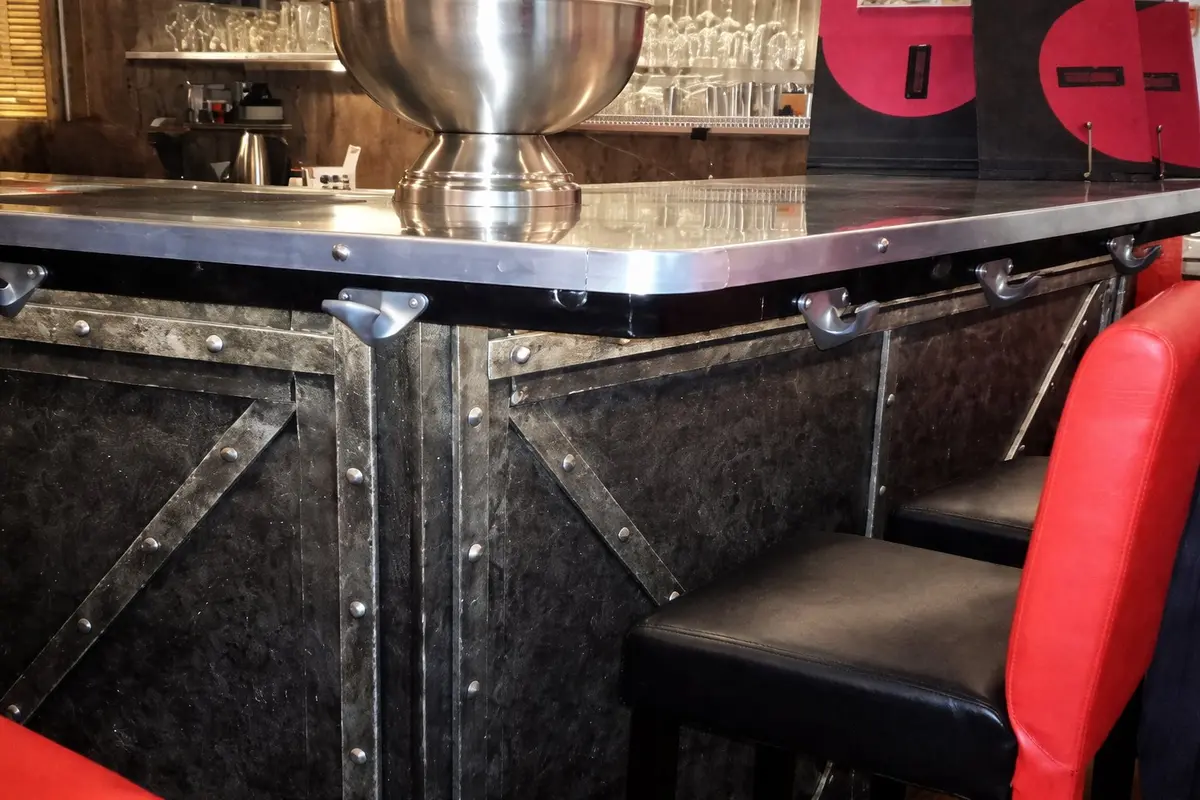
Raw Steel
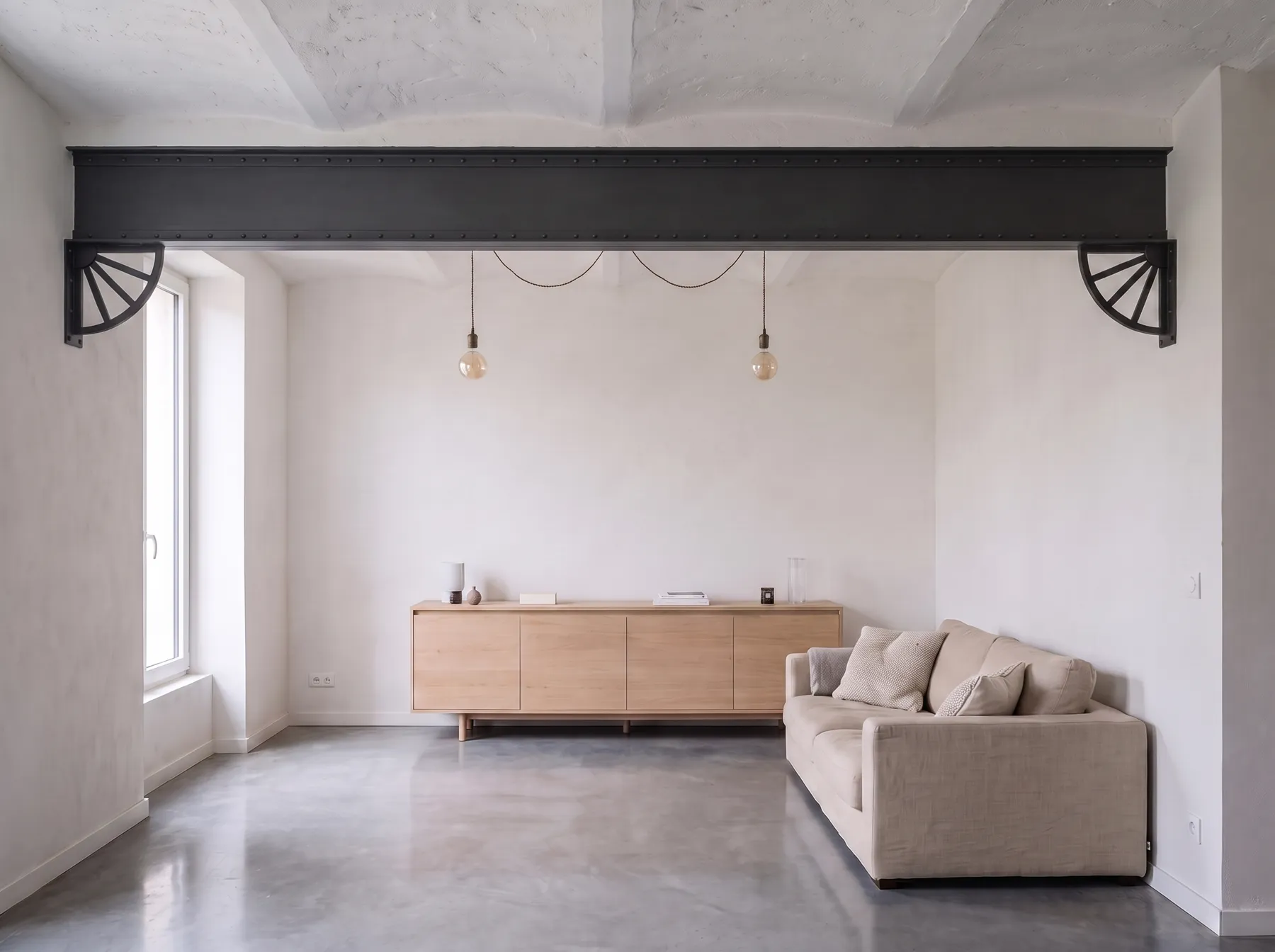
Blue-grey tones with metallic sheen. The perfect match for contemporary interiors with polished concrete, pale wood and filament pendants.
Illusion métal sur bois · Riorges (Loire)
Custom IPN-style faux metal beams in hand-painted solid wood: raw steel, corten rust, aged zinc, cast iron, bronze. A few kilograms where real metal weighs thirty. French craftsmanship since 2010.
Request my free quote (reply within three working days)In one definition
A faux metal beam in wood is a decorative beam carved from solid wood and hand-painted to reproduce the look of steel, cast iron or zinc. Five to ten times lighter than a real steel profile, it can be fixed to plasterboard or a non-load-bearing wall without structural reinforcement, and is made to measure at any length.
Your project, your constraints
Wood beam metal effect, made to measure
The market offers two unsatisfying compromises: polyurethane resin, light, but synthetic to the touch and available only in standard sizes, and real metal, which is beautiful but heavy (15-30 kg/m), costly and impossible to fix to plasterboard.
Our approach sits between the two, and goes beyond both. We start from solid wood, sculpted and hand-painted to reproduce metal finishes with striking accuracy.
Radically light. A 2-metre IPN faux beam weighs between 3 and 6 kg. You carry it under one arm. You fix it to plasterboard with no structural reinforcement.
Fully bespoke. Length, cross-section, angle, profile: everything is adjustable. Need a 4.73 m beam with a 12° angle? Not a problem. With standard resin or real steel, that would be a logistical puzzle.
100% natural materials. Solid wood, natural pigments, protective varnish. No resin, no polystyrene. Our beams smell like wood, feel like wood, and look like metal.
Proven durability. Our earliest faux metal beams were installed over ten years ago. They have needed no retouching.
Five exclusive finishes
Each finish is applied by hand, layer by layer. No two beams are ever exactly the same, just like genuine industrial beams that have spent decades in a factory.
Blue-grey tones with metallic sheen. The perfect match for contemporary interiors with polished concrete, pale wood and filament pendants.
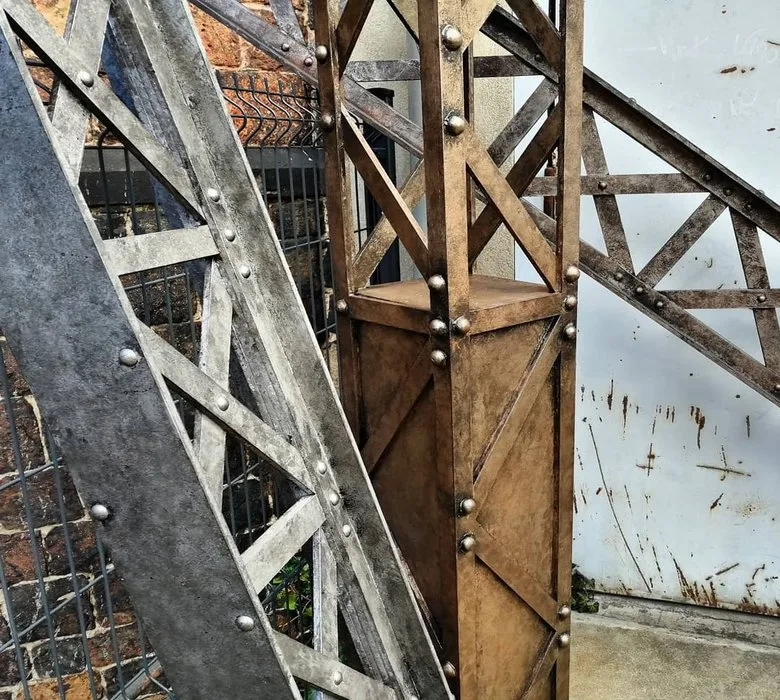
Warm orange and brown tones of weathered corten steel. The most welcoming finish, a firm favourite in restaurants, bars and mountain chalets.
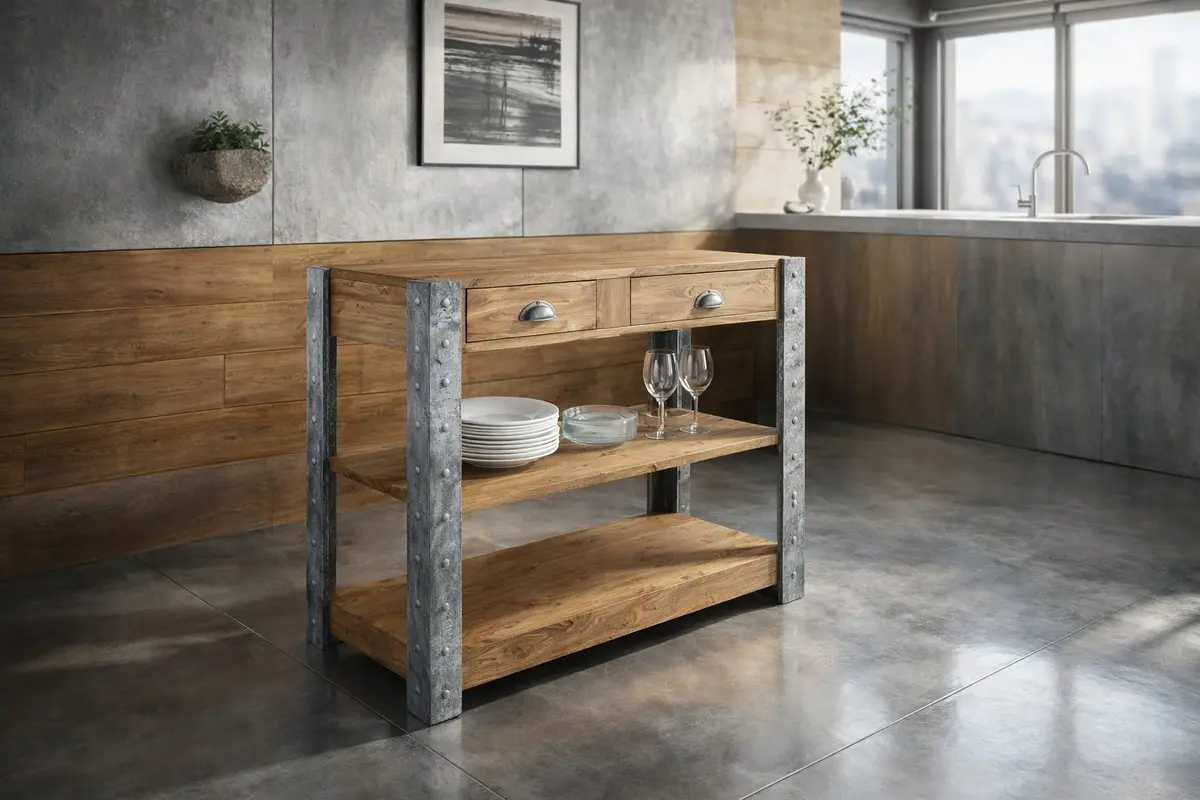
Matte grey tones with bluish undertones and traces of white patina. Subtle and refined, ideal for country-chic or coastal interiors.
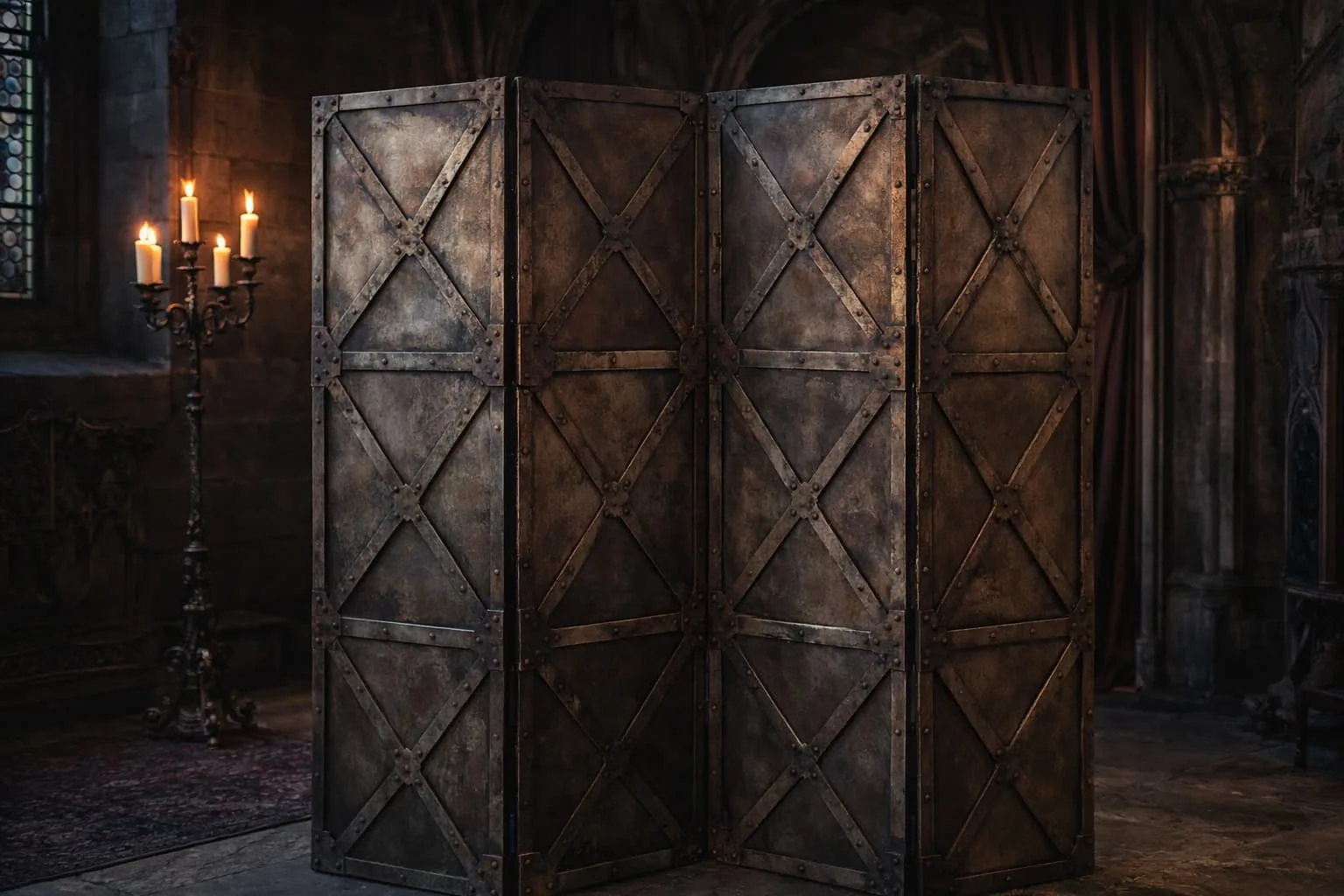
Deep, near-black tones with a characteristic granular texture. Perfect for character-driven interiors and heritage buildings.
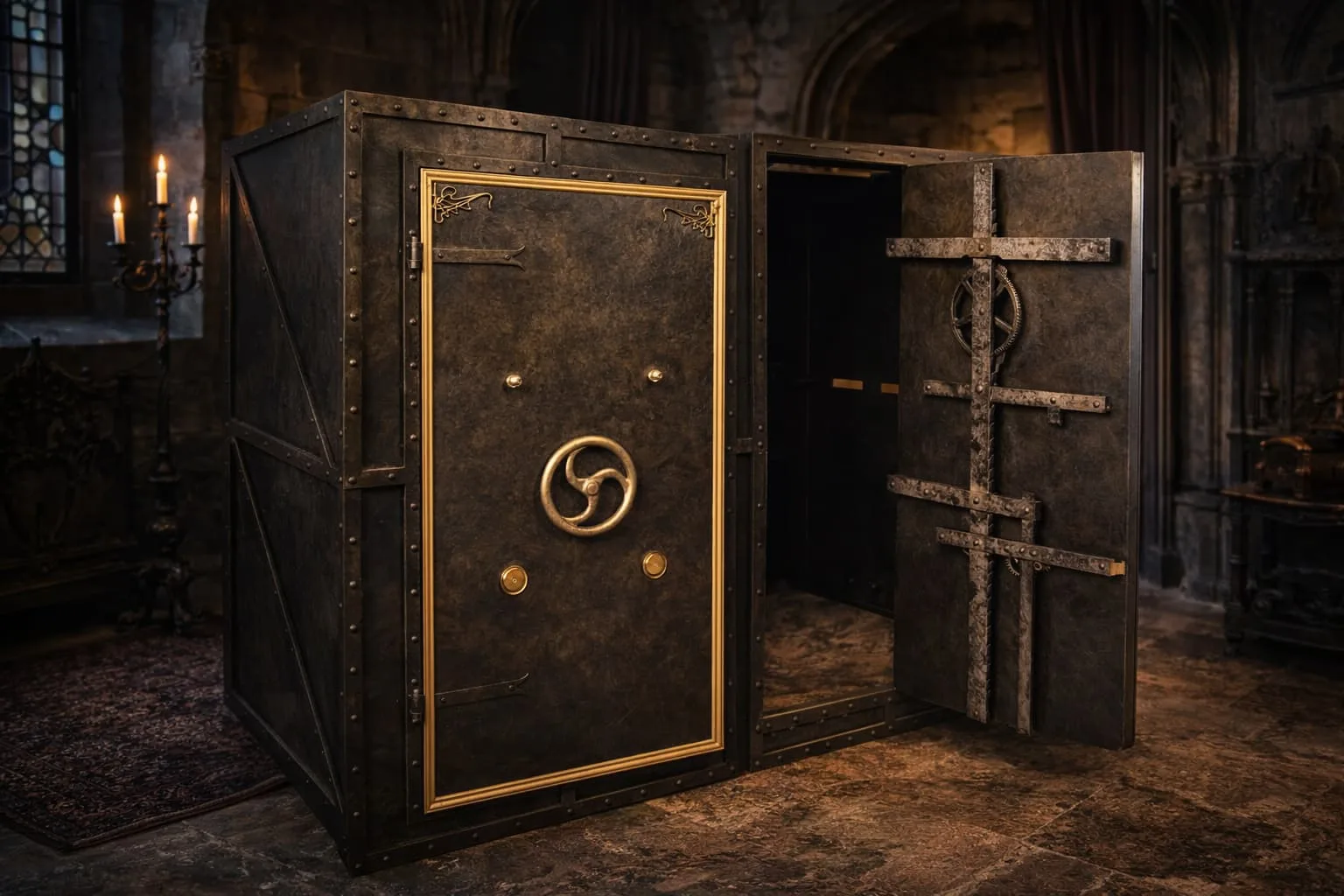
Copper tones with touches of verdigris. The most refined finish, suited to hotel lobbies, fine dining restaurants and prestige residences.
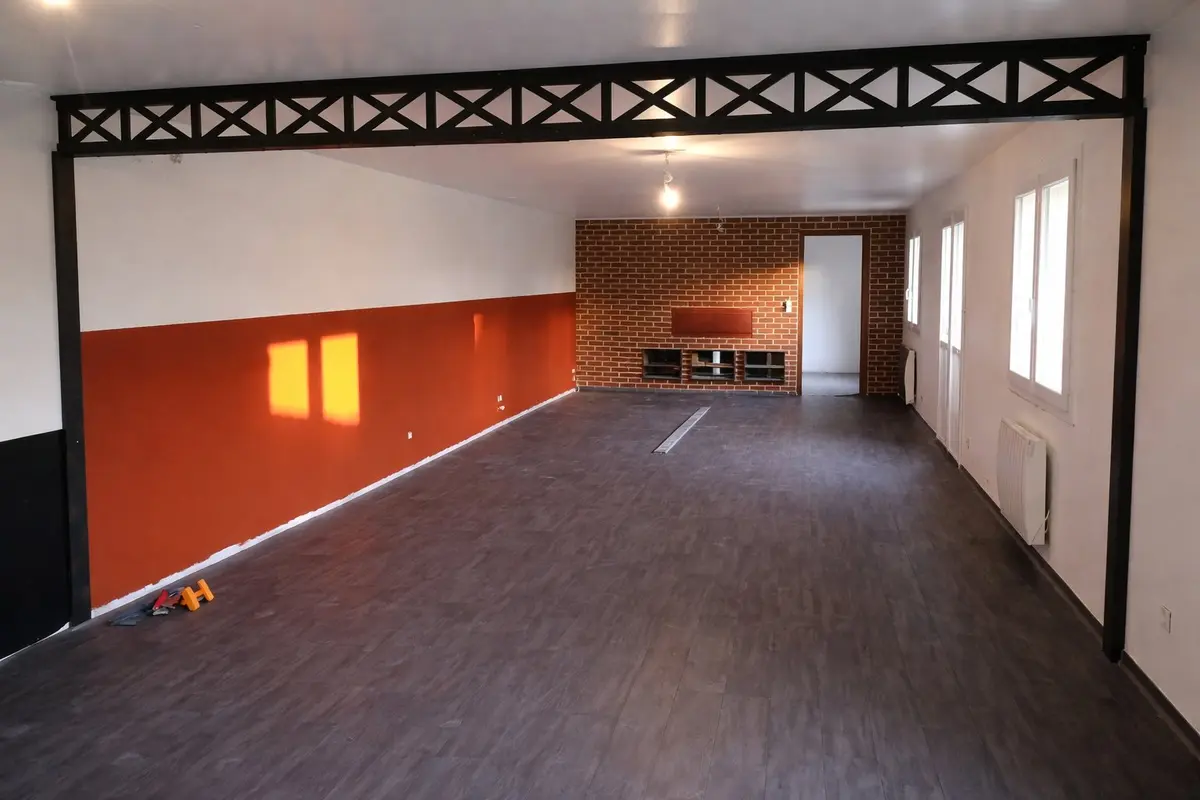
Residential project
A space divider that structures the room without closing it off. Eiffel style, steel effect, made to measure.
From workshop to your space
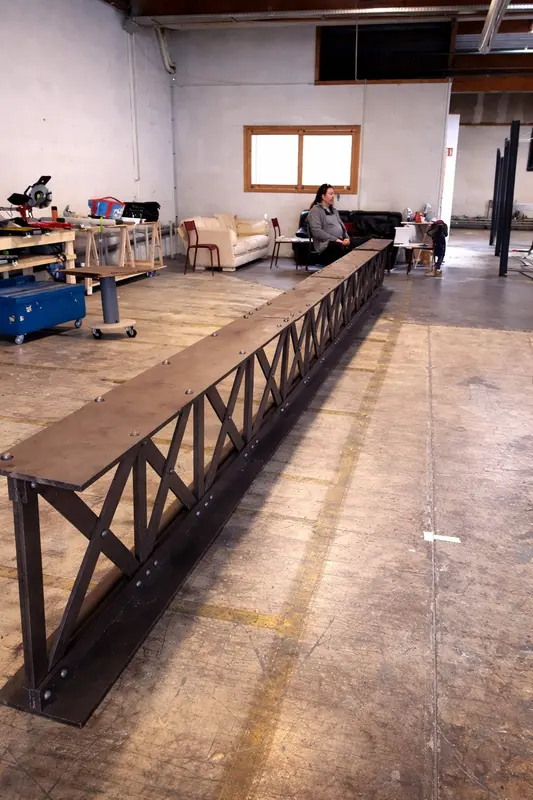
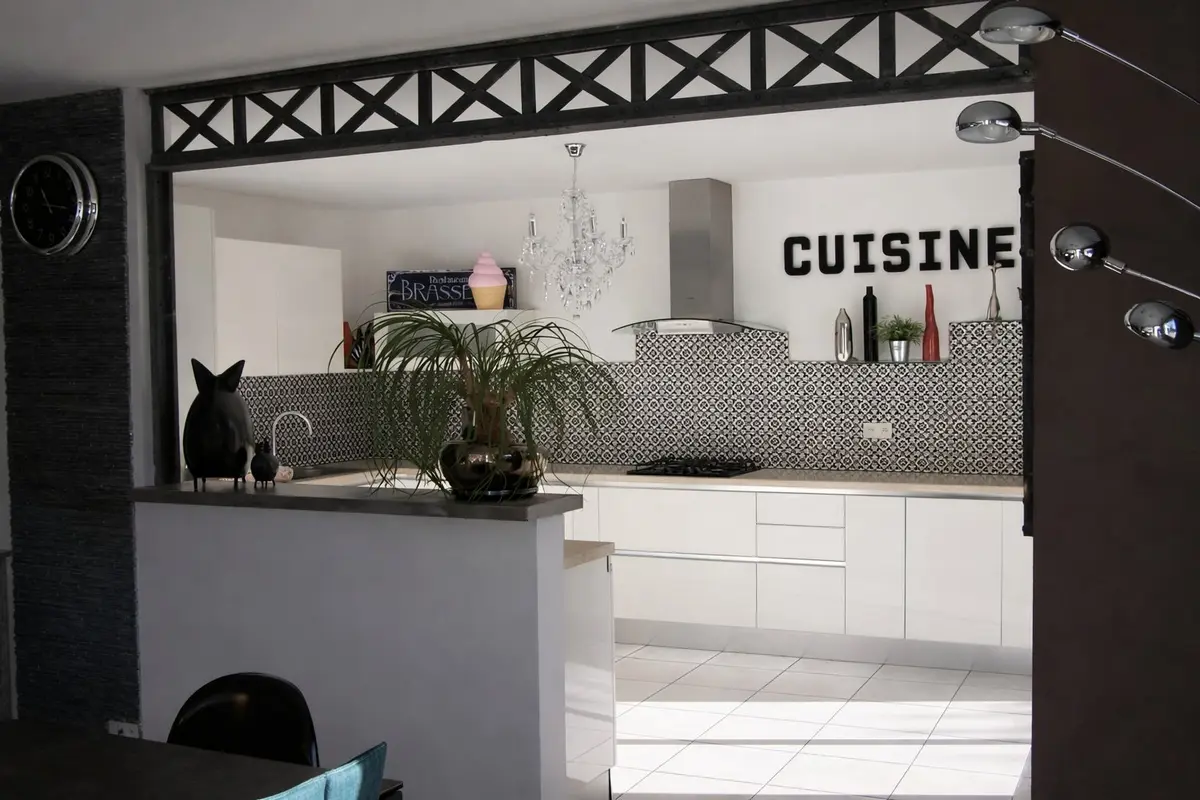 In the workshop The finished beam, before installation In your home The metal illusion installed, a one-of-a-kind piece
 Drag the handle to compare.
Installation typically takes 30 minutes to two hours per beam. One person is sufficient in most cases. Fixings are concealed using touch-up paint included with every order. An installation service is available for larger projects.
The same piece, three states. Scroll to follow the transformation.
Step 1 · The wood
A solid wood core
Douglas fir or spruce cut to the millimetre to your dimensions. 5 to 10 times lighter than steel, with none of the installation constraints.
Keep scrolling
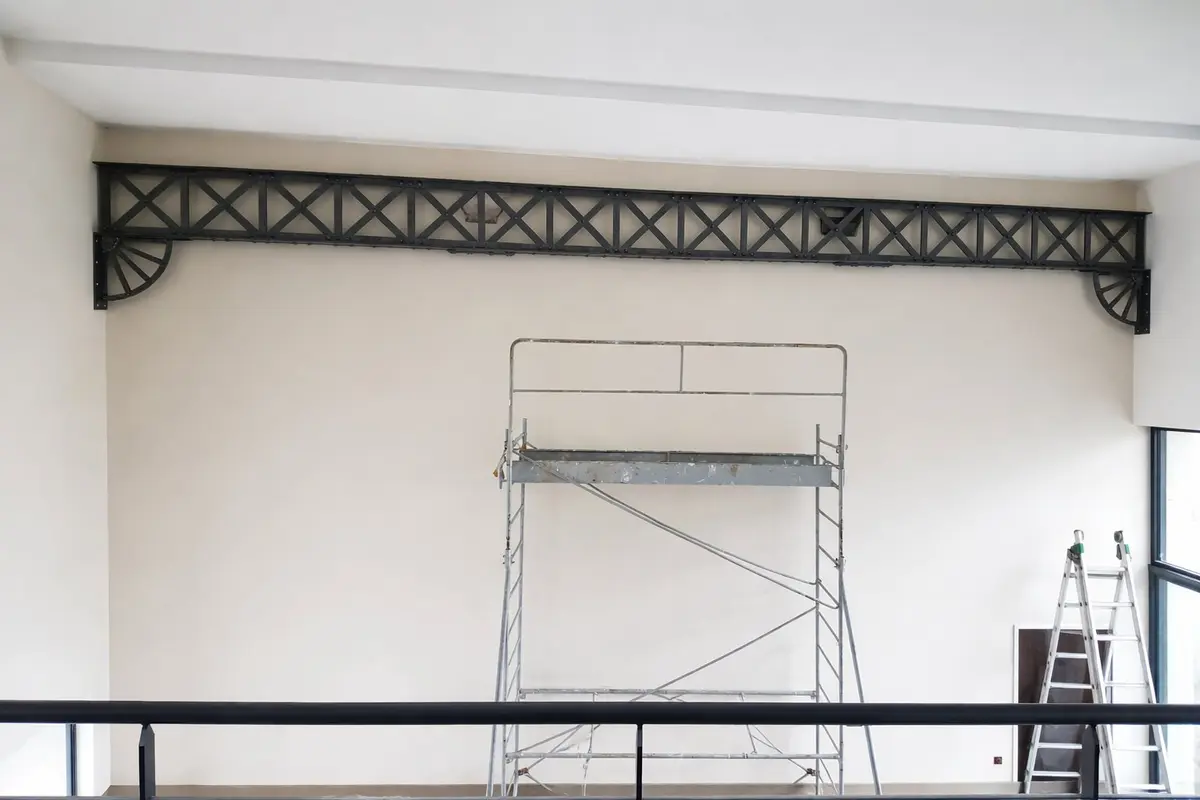
IPN Beam, The Eiffel Style
IPN beams (I Normal Profile) are the defining element of steel-frame construction, converted lofts and Eiffel-type structures. Our faux IPN beams faithfully reproduce this profile, the flanges, the web, the fillet radii, with a precision that makes the illusion complete.
Available in all our finishes and in whatever dimensions you need.
On the ceiling, they recreate the exposed skeleton of an industrial loft, arranged in a crossed grid or in parallel runs.
As a space divider, one or more vertical IPN beams define a zone without walling it off, an elegant solution between a living room and a dining area.
As a door or glass partition surround, they create a structural frame that gives the impression of an opening cut through a load-bearing steel wall.
As a column cladding, they transform an unsightly structural post into a deliberate design statement.
The technical term
A faux IPN beam in wood matches the profile of the standard steel I-beam point for point: the two flanges, the central web, the fillet radii, down to the rivets when the style calls for them. The only difference is the material, sculpted solid wood hand-patinated rather than rolled steel.
Why choose a wooden I-beam imitation over a real profile. A standard steel IPN section weighs 15 to 30 kg per metre. It needs a load-bearing support, often a structural reinforcement, sometimes lifting gear to install. A 2-metre imitation steel I-beam in solid wood weighs 3 to 6 kg: it screws onto battens, on plasterboard as on any non-load-bearing partition, fitted by one person alone.
What made-to-measure changes. Off-the-shelf IPN beams come in standardised sections, and you have to work around them. Our faux IPN beam is made to your exact measurements: precise length, chosen web height, the cut angle your ceiling demands. No masonry rework, no standard section to put up with.
Faux IPN, solid or open-work. The solid profile gives the raw workshop-beam look. The open-work profile, known as Eiffel style, reveals the rivet pattern and visually lightens the whole. Both come in the workshop's five finishes, and the price per linear metre depends on the chosen profile and finish.
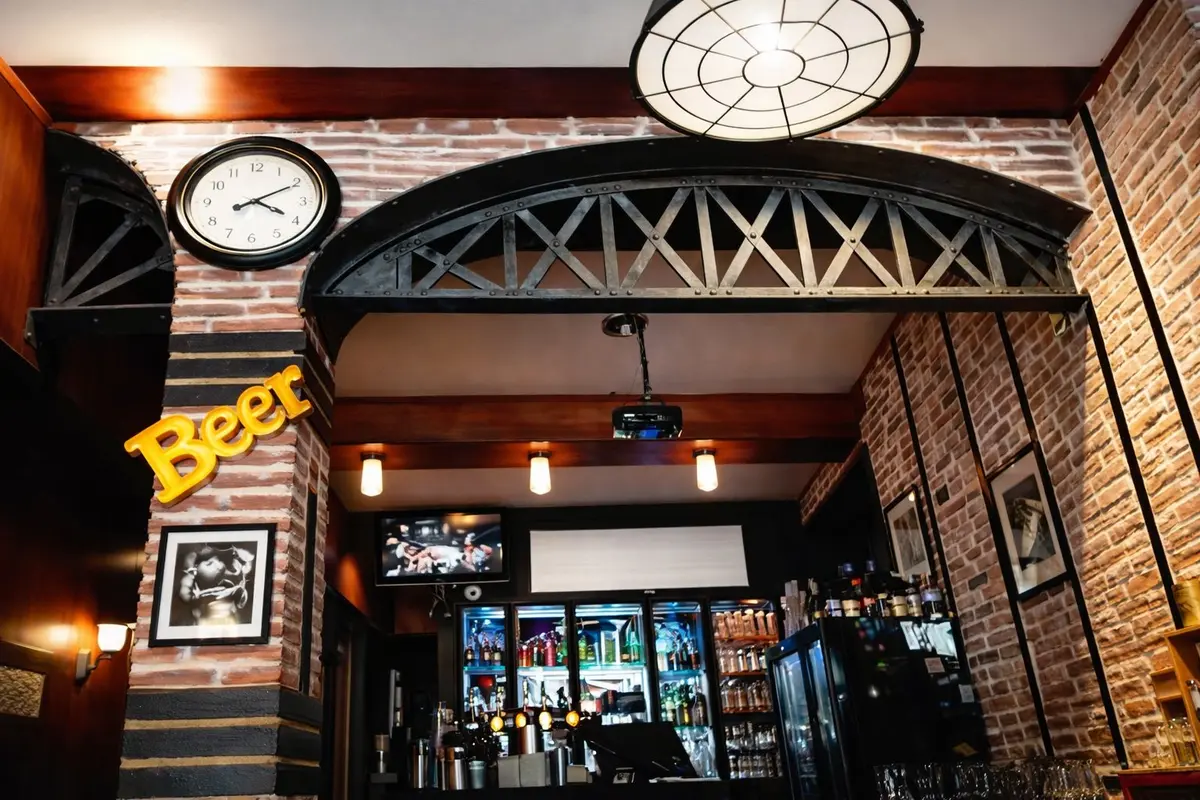
Professional reference
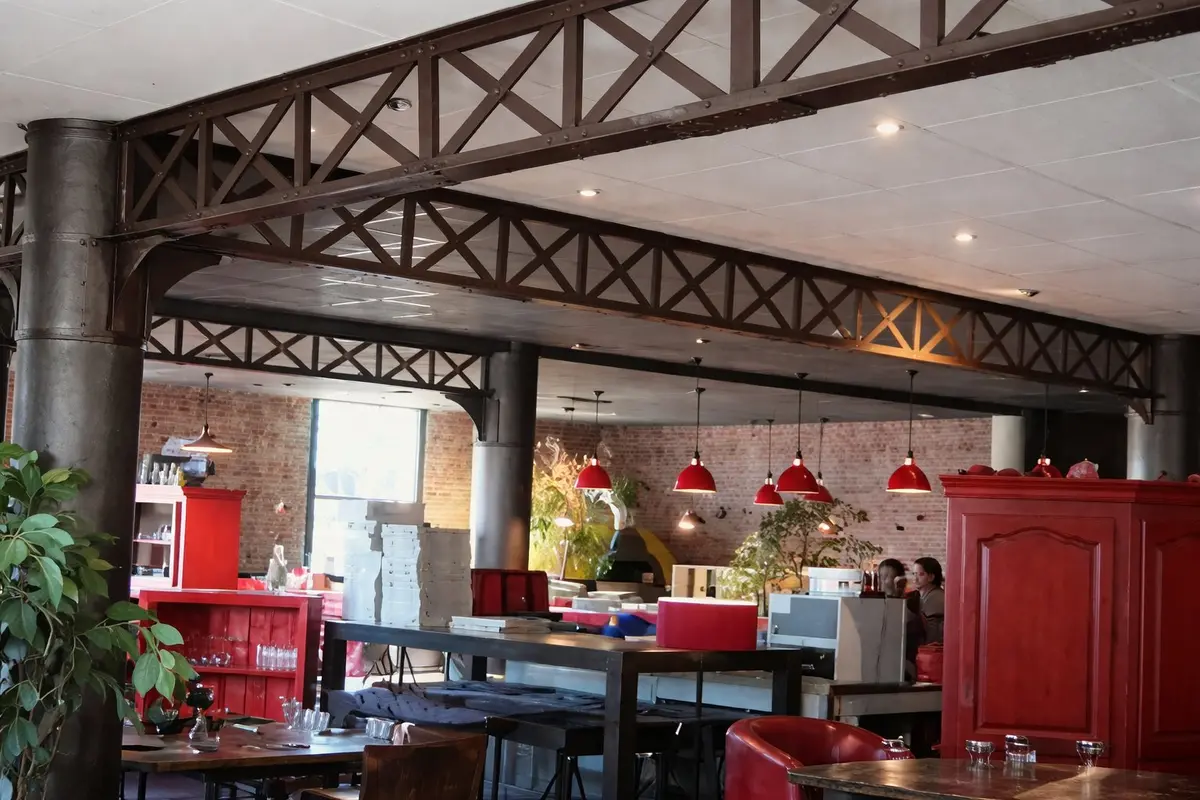
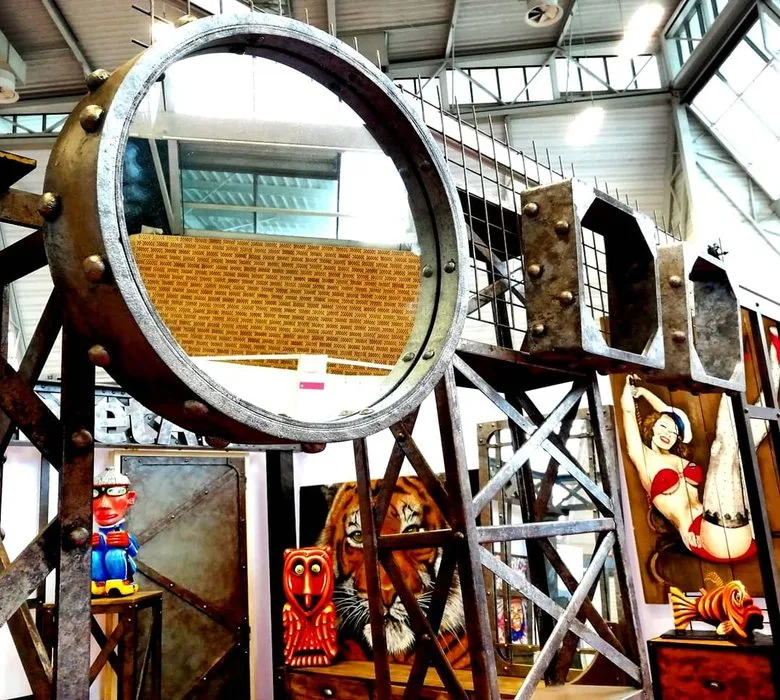
Delirium Café · Dijon
Open-work Eiffel arch above the counter, brushed steel IPN beams, bespoke signature furniture. The result: an authentic character guests photograph and share.
Compare to decide
A transparent comparison to help you make an informed decision, because the right choice depends on your project, not on a sales pitch.
| Criterion | Polyurethane resin | Hand-painted solid wood (Sel d'Embrun) |
|---|---|---|
| Feel | Synthetic, plastic | Natural, like real wood |
| Dimensions | Limited to mould sizes (2 m or 3 m standards) | Fully free, to the millimetre |
| Uniqueness | Two beams are identical, it shows | Each piece is unique, hand-painted |
| Material | Industrial polymer | Solid wood, natural pigments, varnish |
| Weight | Light, hollow-moulded | 3-6 kg for a 2 m beam |
| Fitting on plasterboard | Possible | Possible, no structural reinforcement |
| Durability | Varies by brand | Proven: over 10 years with no retouching needed |
| Touch-ups | Depends on the brand's kit | Touch-up paint included with every order |
| Best for | Simple accent, limited budget, modest space | Full realism, bespoke dimensions, commercial spaces |
Swipe the table to see the right-hand column.
The cost most people forget to count
A plasterboard ceiling generally cannot carry a real steel beam, 15 to 30 kg per metre, without structural reinforcement. That reinforcement is a separate job for a builder or carpenter, priced apart from the beam itself. It is this hidden cost that a faux wood beam removes, not just the difference in purchase price. The price per linear metre is published, no quote required.
They trusted us
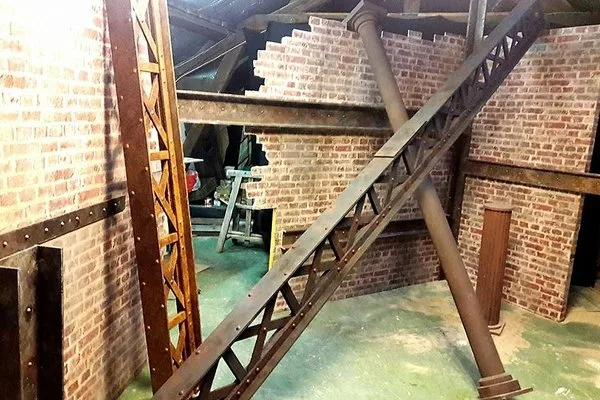
"A stunning result. Our guests genuinely believe the beams are real metal."
Delirium Café
Bar · Dijon, Burgundy
Eiffel open-work arch, brushed steel IPN beams, signature bespoke furniture. A character guests photograph and share.
Prestige chalets
High-end residential · Megève, Haute-Savoie
Signature furniture, exposed beams and decorative pieces for luxury mountain properties. Industrial decor works just as well in Alpine chalets as in city-centre restaurants.
Your estimate
Set your project below. The price is calculated as you go and the breakdown stays on screen.
Excluding installation, metal finishes included. VAT not applicable under French article 293 B: amounts are net of tax.
You pay 40% today, the balance on delivery. Shipping is quoted separately, based on the dimensions and your address.
Payment could not start. Try again, or request your free quote above.
Indicative estimate: the firm price appears on your free quote, within three working days. You are free not to take it further.
What it looks like Faux beam with a solid profile, steel finish Configuration illustration. Real projects are in the portfolio.
Simple installation
Mark out the position. Mark the location on the ceiling or wall using a laser level or chalk line. Identify fixing points (studs or suitable wall plugs for the substrate).
Fix the battens. Screw wooden battens at the marked positions. On plasterboard, use Molly bolts or toggle anchors rated for the load, just a few kilograms.
Mount the beam. Place the beam on the battens and secure with discreet screws or adhesive. Fixings are then concealed with the touch-up paint supplied with every order.
Final touches. Check all joints where beams meet. Apply touch-up paint to any cut ends as needed.
Installation takes 30 minutes to two hours per beam depending on length and accessibility. One person is sufficient in the vast majority of cases. An installation service is available for larger projects.
Standard cross-section
27 cm × 12 cm
Section height × width · Price per linear metre
Renovation
You already have the beam in front of you, and it is the beam itself that is the problem. Cladding an IPN beam means boxing in the existing profile with a hand-patinated solid wood casing, without touching it structurally: the metal stays in place and keeps its load-bearing role, the casing supplies the finish.
Cladding an exposed IPN beam. The casing is made to the dimensions measured on site, then fitted in two or three sections screwed together. Joints are finished with the touch-up paint supplied with the order.
Cladding a concrete beam in wood. A concrete lintel or downstand is treated the same way: the patinated wood casing hides the raw concrete and reads as a workshop steel beam.
Cladding a plasterboard beam box. An existing plasterboard boxing can be reclad without demolition, fixed directly onto the existing frame.
In all three cases, the one measurement worth sending us is the survey: length, visible cross-section, nature of the support. Everything else is settled in the workshop. See the patina technique and real-world projects.
Good to know
A faux metal beam is crafted from solid wood, hand-painted to replicate the appearance of steel, cast iron, zinc or bronze. The result is visually indistinguishable from real metal, yet weighs five to ten times less and can be fixed to plasterboard without structural reinforcement.
Typically 30 minutes to two hours per beam, depending on length and accessibility. In most cases one person is sufficient. Touch-up paint is included with every order to conceal fixings.
Yes. Length, cross-section, angle and profile are all fully customisable to the millimetre. Standard production runs three to six weeks from order confirmation.
Yes. M1 fire-retardant treatment is available on request, making the beams compliant with ERP (public buildings) regulations.
Resin beams are limited to standard mould sizes and have a synthetic feel on contact. Our solid-wood beams are made to measure to the millimetre, hand-painted so no two pieces are identical, and have a natural wood feel, with the look of metal. Durability is proven: our earliest pieces have needed no retouching in over ten years.
Yes, for larger projects. Contact us when requesting your quote and we will include this option.
Polyurethane resin is moulded: dimensions are fixed by the mould, the feel is synthetic, and two beams come out identical. A wood beam with a metal effect is carved from solid wood and hand-patinated: every piece is unique, length and cross-section follow your measurements to the millimetre, and the feel stays that of real wood.
The metal look is built up in successive layers: wood preparation, a pigmented undercoat, hand-applied patinas, then a protective varnish. It is the shading and traces of wear, laid down one by one, that fool the eye, not an off-the-shelf metallic paint. Five finishes can be reproduced to order, from raw steel to patinated cast iron.
Sel d'Embrun is a craft workshop based in Riorges, in the Loire region of France, founded in 2010 by Camille Marchand. Faux IPN beams and faux metal beams are made one piece at a time, in hand-patinated solid wood, to the exact measurements of each project, and shipped throughout France. No subcontracting, no production runs.
Yes. Beams destined for buildings open to the public can receive an M1 fire-retardant treatment, to be specified when ordering. This rating covers the fire reaction of the treated material and is checked during safety inspections. La Traviata, in Grenoble, was fitted out under this exact requirement.
Keep exploring
Your project
Tell us about your space, your vision, your constraints. Camille will reply with a detailed quote within three working days, free of charge, no commitment.
No obligation to accept, the decision stays entirely yours. If a technical question comes up after the quote, you can come back to us at any time.
Request my free quote