Comparison 10 min read
Industrial Furniture: Real Metal or Wood with a Metal Illusion? The Honest Comparison
You have made up your mind: your home or your venue is going to have an industrial look. The key question remains, the one everyone asks when it comes to placing an order: should you invest in genuine steel-and-metal furniture, or go for wood with a metal-illusion finish?\n\nThe answer is not as clear-cut as people tend to think. Each approach has its strengths and its limitations. The right choice depends on your project, your space and your budget, not on a value judgment about the material itself.\n\nAs a workshop that has specialised in the wood metal-illusion technique since 2010, we know both worlds. We have worked in spaces furnished with real steel, and every day we craft pieces in wood with a metal finish. Here is a straight-talking comparison, no spin, no vested interest.
Real metal: what it brings and what it demands
The authenticity of the material
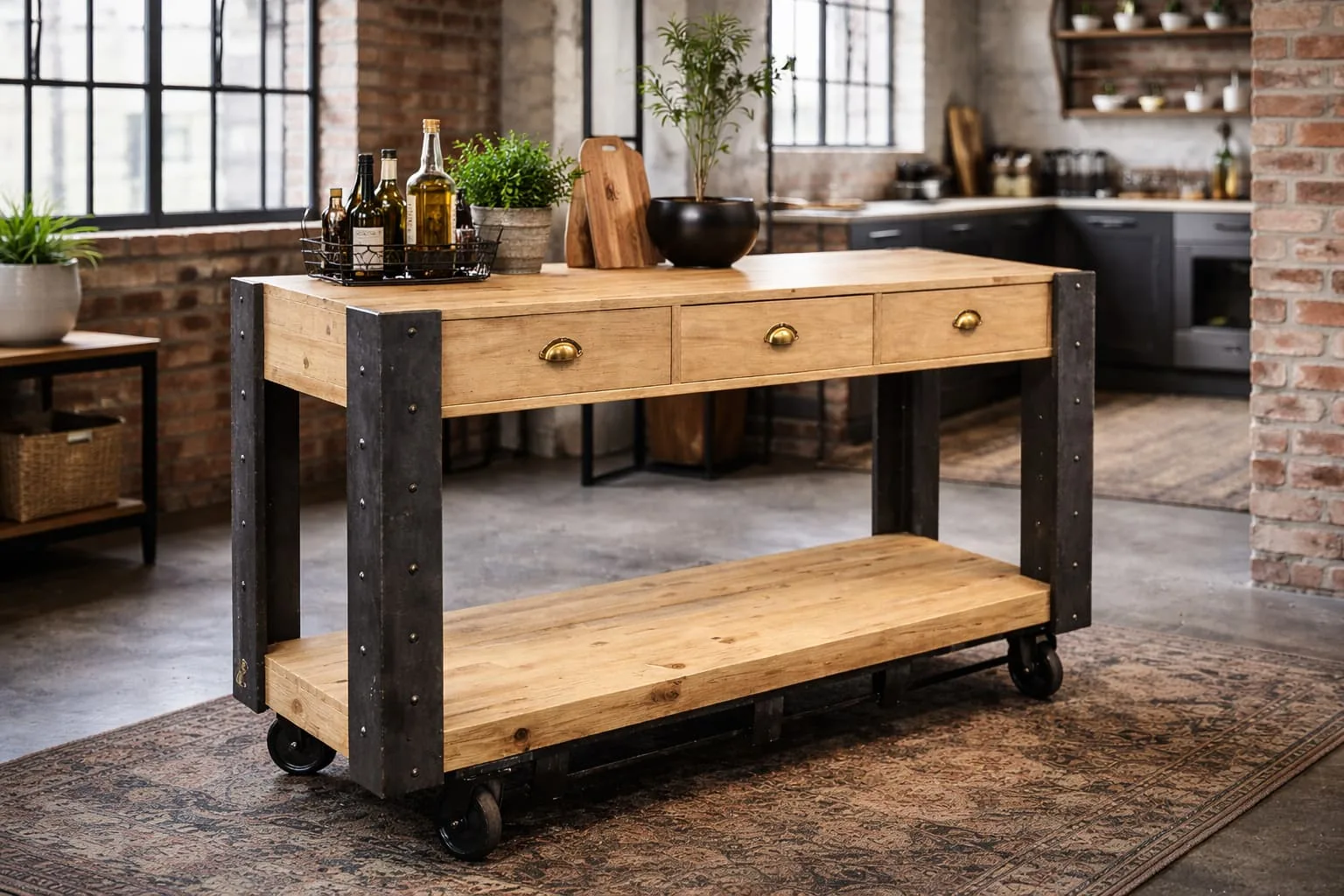
Real metal has something irreplaceable: it is metal. The cold of steel under your hand, the distinctive sound when you set a glass down on it, the weight that anchors a piece to the floor like a rock, these sensations are real and unique. A 150 kg steel sideboard does not shift when a door is opened. A cast-iron table has a physical presence that no imitation can fully replicate.
Natural patina is the other strong argument. A piece of raw steel evolves over time: rust develops where hands rest, knocks leave marks that tell the object's story. It is a living material, in the sense that it transforms through contact with its environment.
The constraints people underestimate
Weight is the first reality of genuine metal furniture. A 1.80 m sideboard in steel and solid wood commonly weighs between 100 and 150 kg. In practical terms, this means three things that photographs on the internet simply do not show.
Delivery requires a specialist heavy-furniture carrier. Expect a surcharge of 150 to 400 euros depending on distance, and a fixed delivery slot. The driver will not carry it to the third floor without a lift, or only with a substantial supplement.
Installation requires at least two strong people. Manoeuvring a 150 kg sideboard through a furnished living room without scratching the floor, scuffing the walls or injuring your back is a delicate business. And once it is in place, it stays put. If you reorganise the room in six months, it is a whole operation in itself.
The floor must bear the load. A 150 kg piece concentrated on four feet exerts significant pressure. On a floating floor, the feet will mark. On fragile tiles, they risk cracking. On an old timber floor in an upper storey, the question of admissible load is a serious one.
Finally, there is the budget. Industrial furniture in real metal, handcrafted in France, costs around 3,750 euros per piece depending on dimensions and complexity. It is a significant investment, justified by the quality of the material and the craftsmanship, but one that limits how many pieces you can realistically afford.
The wood metal-illusion: what it offers and where it excels
A realism that has caught up with the real thing
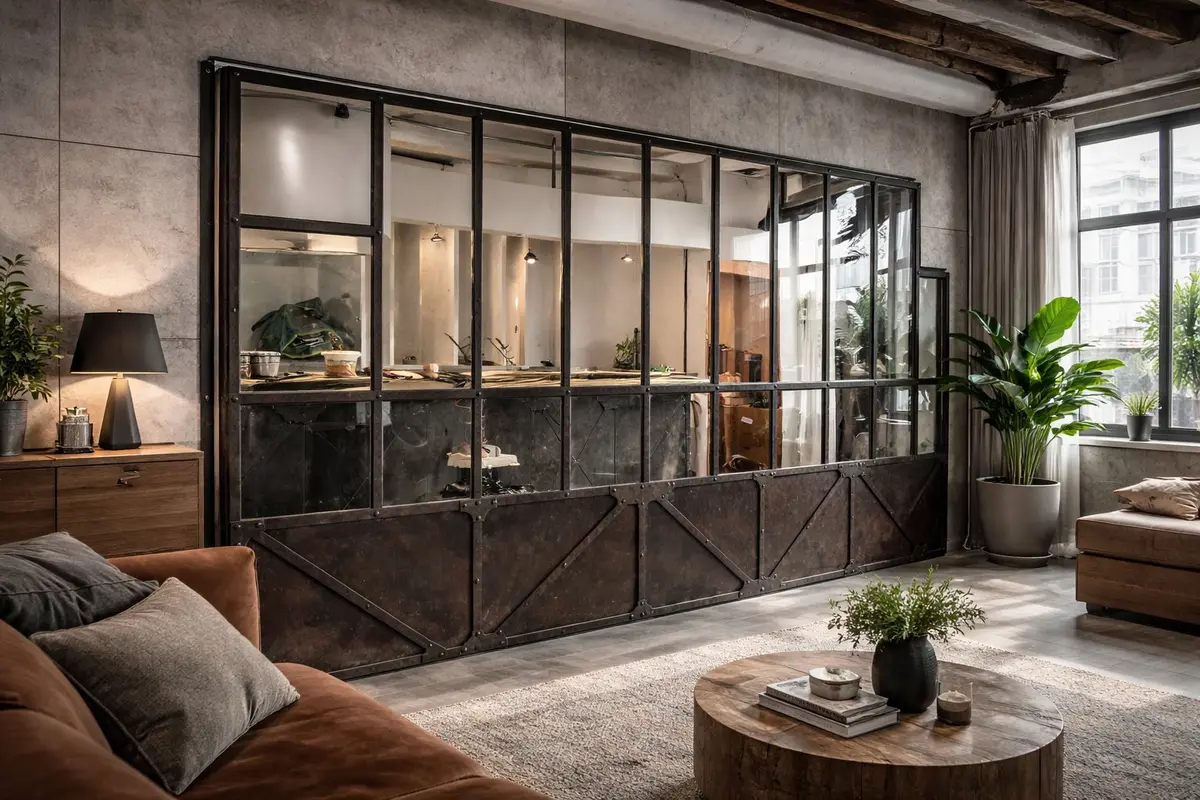
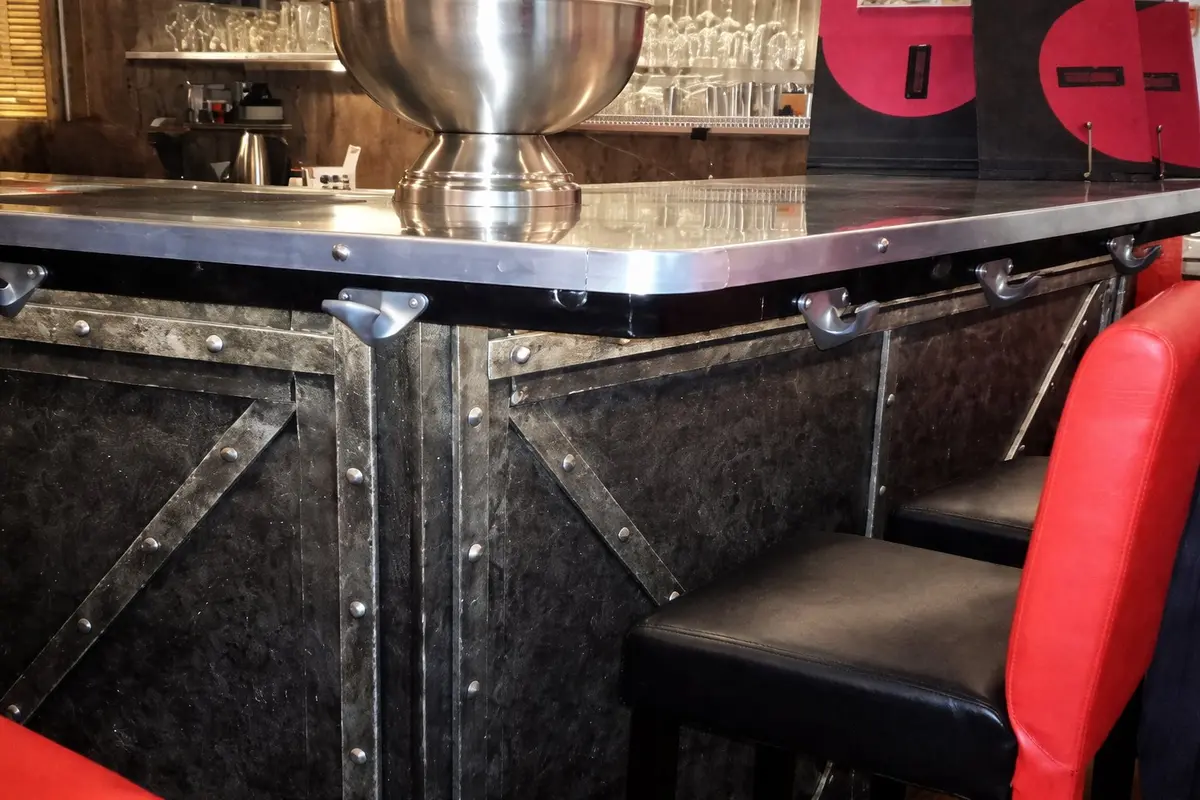
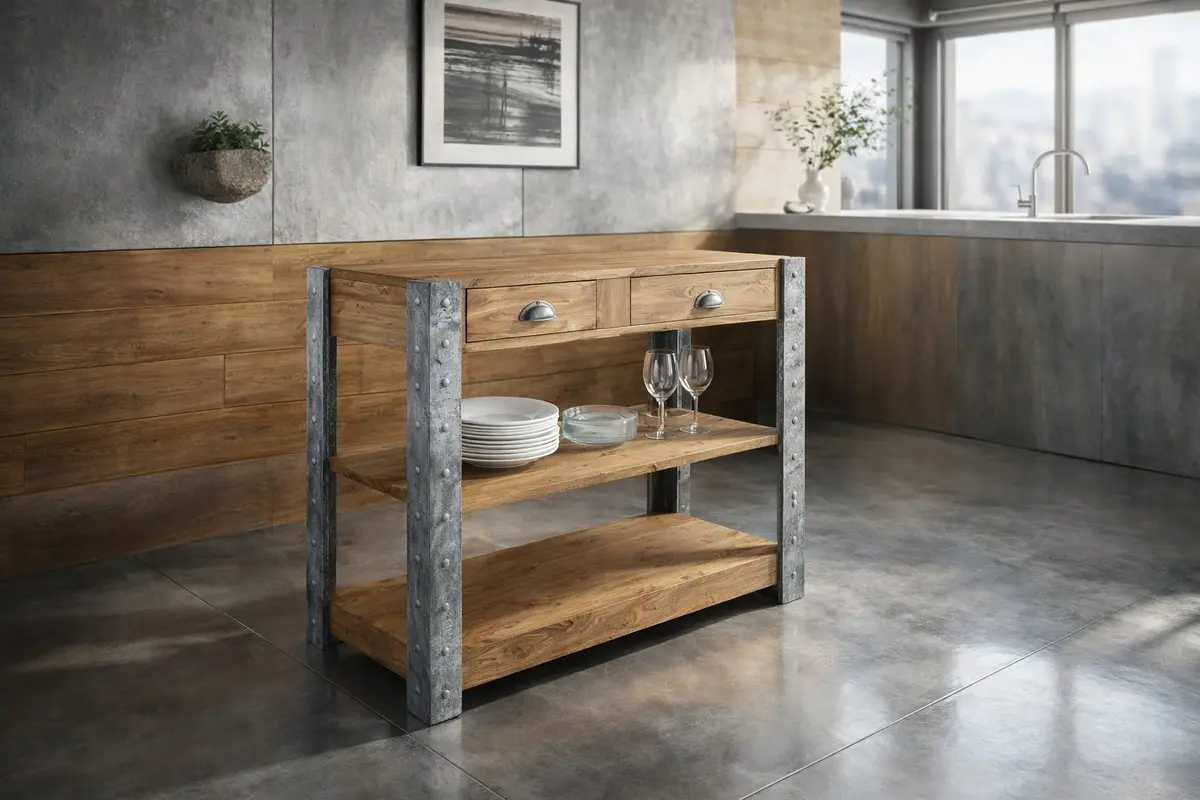
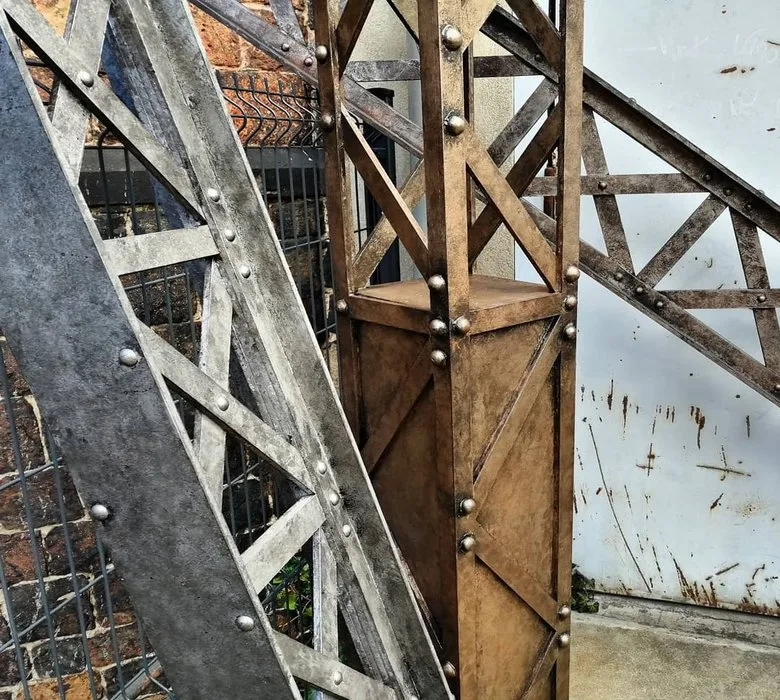
Fifteen years ago, a piece of furniture painted in an "metal effect" finish was visible from across the room. The paint was uniform, the reflections absent, the result flat. Today, the technique has advanced enormously. At Sel d'Embrun, our finishes reproduce the chromatic variations of steel: the blue-grey zones, the silver reflections, the shades of grey that shift with the light. The traces of patina, the false weld beads, the surface irregularities are all painted one by one, by hand. The result deceives building professionals themselves.
The key to realism is the handmade process. A finish applied by spray gun in a factory will always be too uniform. The craftsman's hand brings the controlled imperfections that make the difference between a "decorative effect" and a genuine illusion.
The freedom that metal cannot match
Wood can be worked to the millimetre. Need a sideboard exactly 1.63 m wide to fit between two walls? A table with a cut corner to work around a post? A shelf that follows a curved wall? Wood says yes. Steel says "it is possible, but the cutting and welding will be expensive."
The range of finishes is also far wider. With real metal, you have essentially raw steel, brushed steel, natural rust and paint. With the wood illusion, you add aged zinc, patinated cast iron, oxidised bronze, verdigris copper, antique brass, and every intermediate shade. Each finish is adjustable in intensity, colour and texture.
Simplified everyday living
A wood metal-illusion piece weighs 10 to 15 times less than its steel equivalent. You can have it delivered in a standard vehicle. Two people can carry it upstairs. You can move it when you rearrange the room. You can place it on any floor without concern.
Maintenance is virtually zero. The protective varnish prevents dust from embedding, resists moisture and UV. A dry cloth is all it takes. No rust treatment, no protective wax, no periodic sanding.
And the price is significantly lower. For a budget equivalent to a single real-steel sideboard, you can furnish an entire room in metal-effect furniture, table, sideboard, shelving, with a visually coherent and striking result.
The comparison by the numbers
| Criterion | Real metal (steel + wood) | Wood metal-illusion |
|---|---|---|
| Weight (1.80 m sideboard) | 100 to 150 kg | 15 to 25 kg |
| Average price per piece | 3,750 EUR | 1,250 EUR |
| Lead time | 6 to 12 weeks | 3 to 6 weeks |
| Delivery | Specialist carrier (150-400 EUR) | Standard delivery or self-collection |
| Installation | 2-3 people minimum | 1 person is enough |
| Compatible with all floors | No (risk to parquet, tiles) | Yes |
| Easy to move | No | Yes |
| Custom dimensions | Yes (costly due to cutting/welding) | Yes (natural for wood) |
| Available finishes | Raw steel, brushed, rust, painted | Steel, rust, zinc, cast iron, bronze, copper |
| Maintenance | Periodic rust treatment | Dry cloth (protective varnish) |
| Durability | Almost unlimited | 10+ years without retouching (proven) |
| Natural patina | Yes (evolves over time) | No (stable, fixed appearance) |
| Material authenticity | True steel | Solid wood + handcrafted paint |
| Fire-rated option | Yes (metal) | Optional (M1 treatment) |
| Environmental impact | High (forging, heavy transport) | Low (wood, natural pigments) |
So, real metal or wood illusion?
There is no universal answer. The right choice depends on what matters most to you in your project.
Choose real metal if...
The authenticity of the material is a non-negotiable for you. You like the idea of a piece that weighs what it is and that will naturally develop patina over the years. Your space has a concrete floor or a structure capable of bearing the load without issue. You have the budget to invest in individual high-end pieces and the logistics to handle delivery and installation. You do not plan to move the furniture once it is in place.
Choose the wood metal-illusion if...
The visual result matters more than the raw material. You want to furnish an entire space in an industrial style without blowing the budget. Your floor is parquet, tiles or timber on an upper storey. You like the flexibility to rearrange things. You need precise custom dimensions. You are looking for varied finishes (zinc, cast iron, bronze) that real metal does not naturally offer. Or you are fitting out a professional space where lightness and fire-rating compliance are important criteria.
Why not both?
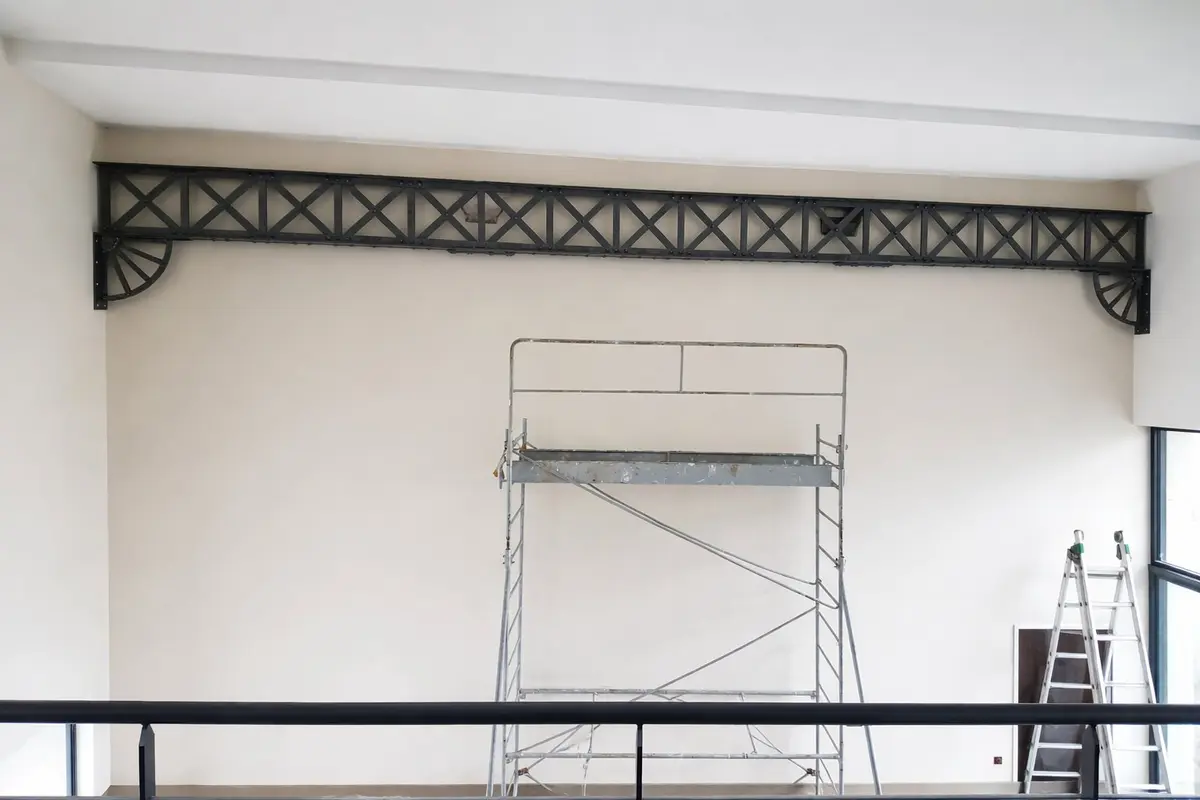
The most successful projects we have been involved in often mix both approaches. One strong piece in real metal, a dining table, a bar counter, combined with complementary pieces in wood illusion: false metal ceiling beams, a sideboard, shelving. The real metal anchors the space with its physical presence. The wood illusion completes the decor without weighing down the floor or the budget. The overall result is visually coherent because our finishes are calibrated to blend seamlessly with real steel.
What nobody else tells you
A few realities that most industrial furniture catalogues tend to gloss over:
Real metal stains. A raw steel sideboard placed against a white wall will eventually leave oxidation marks on the plaster. Rust runs when you set a damp glass on an untreated steel surface. That is the charm of a living material, but it is also a domestic reality you have to be willing to accept.
Real metal is noisy. Setting a plate on a steel table, opening a sheet-metal sideboard door, pulling out a metal drawer, everything resonates. In a busy restaurant, that is fine. In a quiet living room at ten at night, it is a different matter.
Real metal is cold. Literally. In winter, sitting on a steel chair or resting your forearms on a metal surface is unpleasant. Wood, even painted to look like metal, stays at room temperature.
The wood illusion has its limits too. If someone taps the surface with a coin, the sound of wood betrays the illusion. Very close up (within 10 cm), a trained eye can distinguish the paint from real metal under raking light. And the finish is fixed in time, it will not develop a natural patina the way real steel does. If the gradual evolution of the material is part of your aesthetic vision, only real metal can deliver that.
Being honest about these points allows you to make an informed choice, with no unpleasant surprises after delivery.

Our position
At Sel d'Embrun, we chose wood fifteen years ago, and we have never looked back. Not because real metal is inferior, but because our technique opens up possibilities that metal closes off. The lightness makes possible installations that real steel prohibits (plasterboard ceilings, upper floors, old buildings). The millimetre-precise custom work adapts to spaces that metal moulds and jigs cannot serve. And the price makes industrial decoration accessible to projects that could never have afforded it in real metal.
Our conviction: the final result matters more than the raw material. What your visitors, your customers, your guests see when they walk into the room is the atmosphere, not the chemical composition of the sideboard.
Your industrial furniture project
Whether you are leaning towards real metal, the wood illusion or a mix of both, we are ready to talk through your project. Tell us about your space, your ideas and your budget, we will guide you with transparency towards the most suitable solution.
Request a Free Quote, Response within three working days
See our work · Our furniture · Our craft
It is the same technique applied to our metal-effect beams, on a very different scale.