Guide 6 min read
Interior Glass Partition Without Metal: The Lightweight, Bespoke Alternative
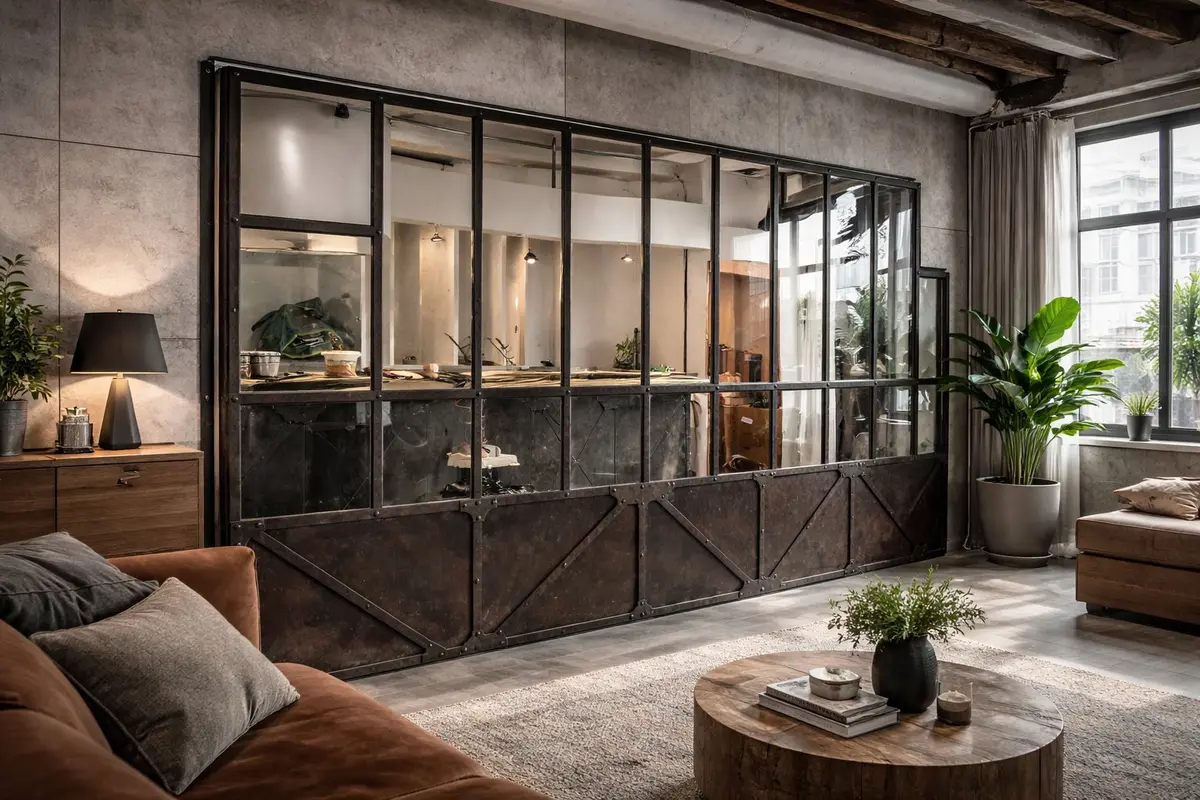
The interior glass partition has become the defining feature of industrial-style decor. Between kitchen and living room, in an entrance hall, as an office divider or a bedroom screen: it brings light, transparency and the character of a workshop aesthetic. But a genuine steel partition is heavy, expensive, and demands substantial structural work.\n\nThere is an alternative that very few people know about: the interior glass partition in wood with a metal effect. The same aesthetic, the same visual impact, without the constraints of real steel. Here is everything you need to know before making your choice.
Steel partitions: where the problems start
On paper, a steel glass partition ticks every box: authentic look, solidity, long life. In practice, several constraints hold projects back.
Weight. A steel partition 150 cm wide by 200 cm tall weighs between 40 and 80 kg depending on the thickness of the framing and the type of glazing. That load requires either a load-bearing wall or reinforcement of the structural frame. On a standard plasterboard partition it is simply impossible without reworking the structure behind it.
Cost. A bespoke interior steel partition, fitted by a metalwork specialist, costs between 1,500 and 4,000 euros for a basic model (2 to 4 panes). Larger models or those with a sliding door easily exceed 5,000 euros. It is the single most expensive element in an interior design project, and often the one that blows the budget.
The work involved. Fitting a steel partition requires a professional, a metal-joiner or structural glazier. The opening must be prepared, the support reinforced if necessary, and the frame anchored to the floor and ceiling before the glazing is set. Allow at least a full day of work, with all the disruption that entails (noise, dust, tradespeople on site).
Lead times. A bespoke steel partition requires 4 to 8 weeks of fabrication in a metalwork shop. Add in the time for measurements, quote approval and scheduling the installation, and the project routinely takes 2 to 3 months from first contact to finished partition.
The wood-with-metal-effect partition: how it works
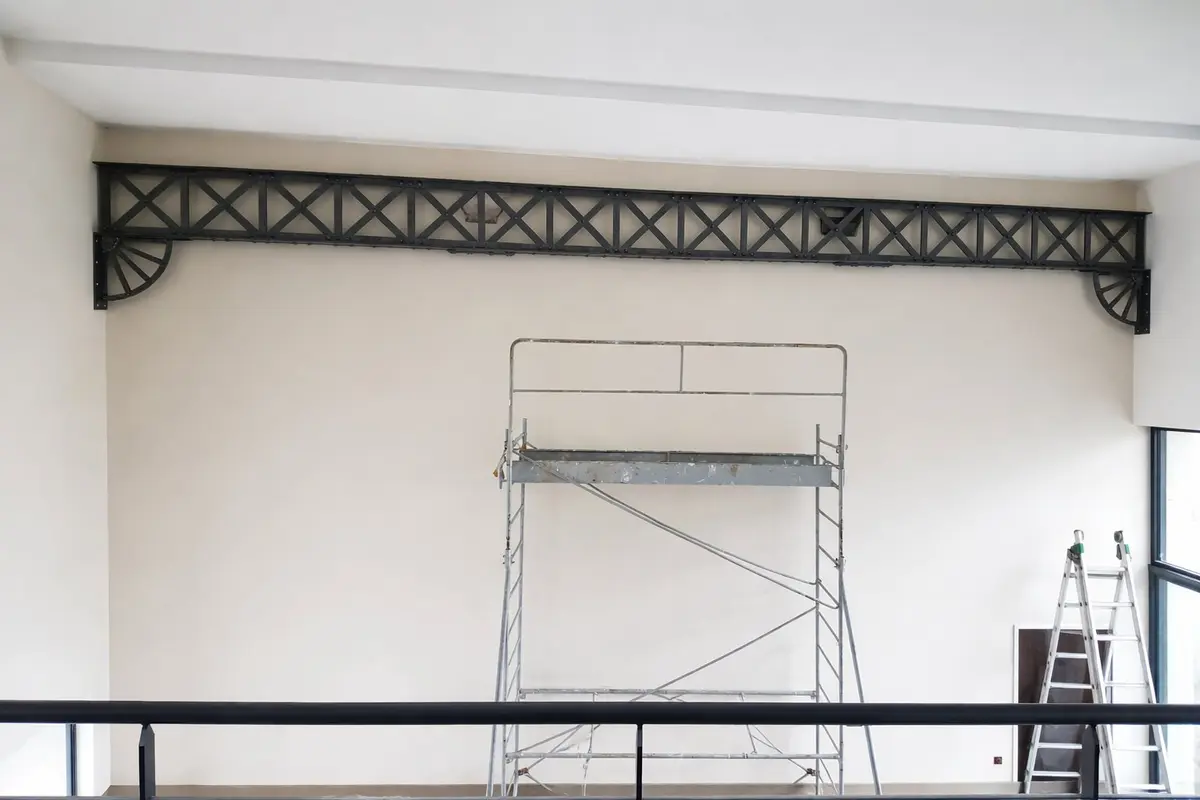
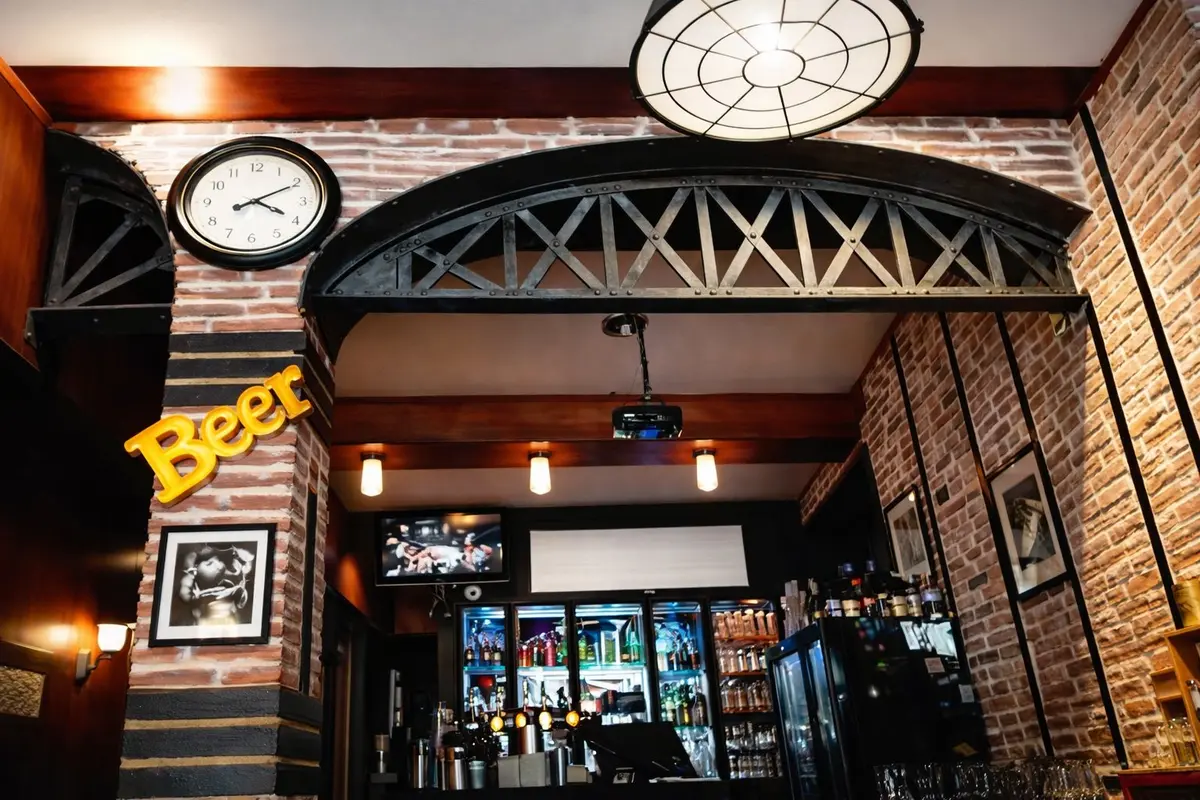
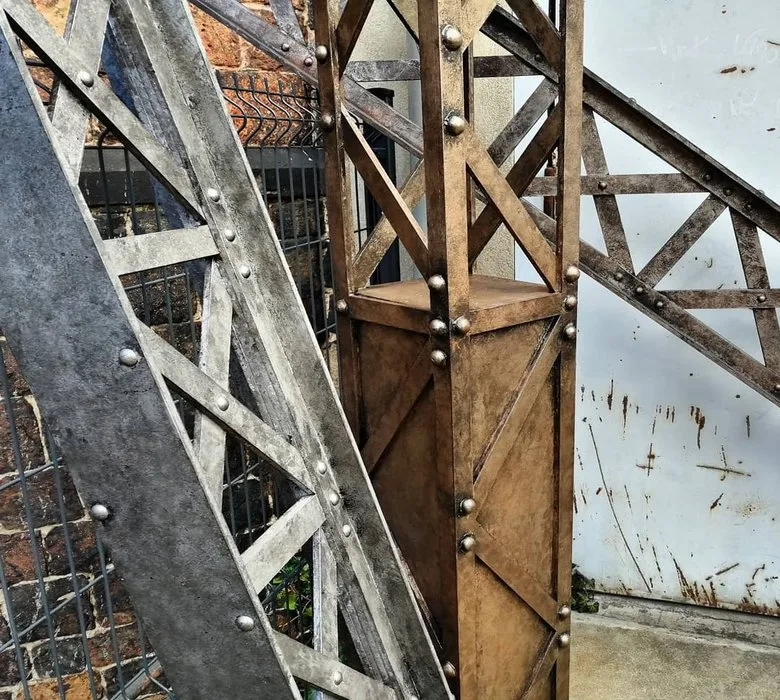
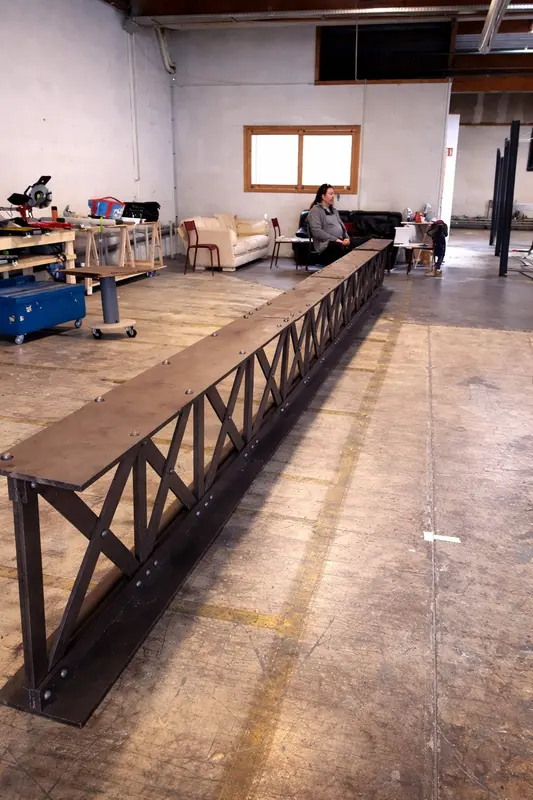
The principle is the same as for our decorative metal-effect beams: a solid wood structure is built to the exact dimensions of your opening, and every upright and crossbar is then hand-painted with a metal illusion finish, raw steel, aged steel, weathered zinc or cast iron.
The glazing can be real glass (single or laminated depending on your sound-insulation needs) or transparent acrylic for an even lighter result. The panes are set into the wooden frame in exactly the same way as in a steel partition, from the outside, the difference is undetectable.
The result: an interior partition that looks exactly like a steel one, at a third to a quarter of the weight, half the price, and with a simplified installation that can be completed in a few hours.
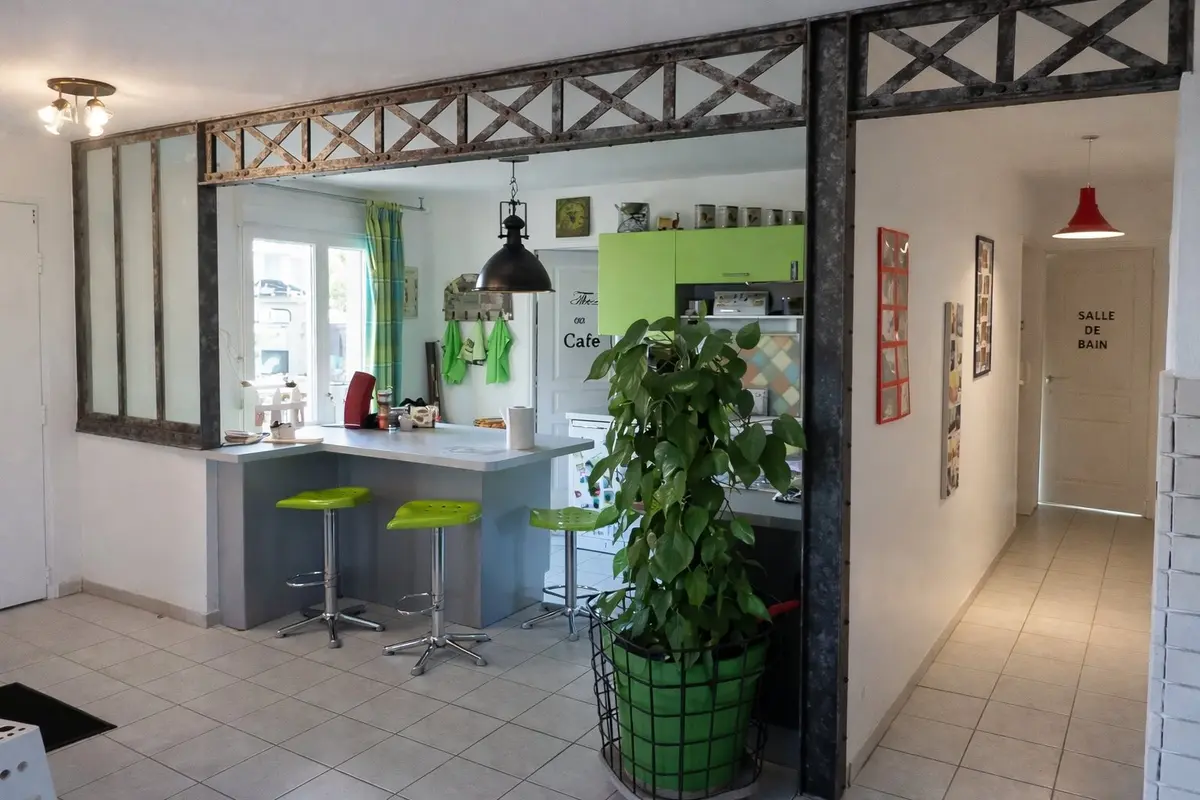
Comparison: steel vs wood with metal effect
| Criterion | Steel partition | Wood with metal effect |
|---|---|---|
| Weight (150x200 cm) | 40 to 80 kg | 12 to 20 kg |
| Bespoke price | 2,750 euros | 1,350 euros |
| Can be fitted on plasterboard | No (reinforcement required) | Yes |
| Fabrication lead time | 4 to 8 weeks | 3 to 5 weeks |
| Installation | Professional metalworker (1 full day) | Competent DIYer or tradesperson (2 to 4 hours) |
| Finishes | Raw steel, painted black | Steel, rust, zinc, cast iron, bronze |
| Bespoke | Yes | Yes (greater freedom on shapes) |
| With sliding door | Yes (significant extra cost) | Yes |
| Maintenance | Anti-rust treatment | Dry cloth (protective varnish) |
| Durability | Near unlimited | 10 years+ without any touch-up |
Which spaces work best?
Kitchen / living room
This is the classic application for an interior glass partition: separating the kitchen from the living room while letting light through and preserving the visual connection. The wood-with-metal-effect partition is particularly well suited here: it fixes easily onto the existing partition (usually plasterboard) with no structural reinforcement. And if your kitchen produces strong cooking smells, real glass provides genuine separation, only the visual effect suggests an open studio space.
Entrance hall / corridor
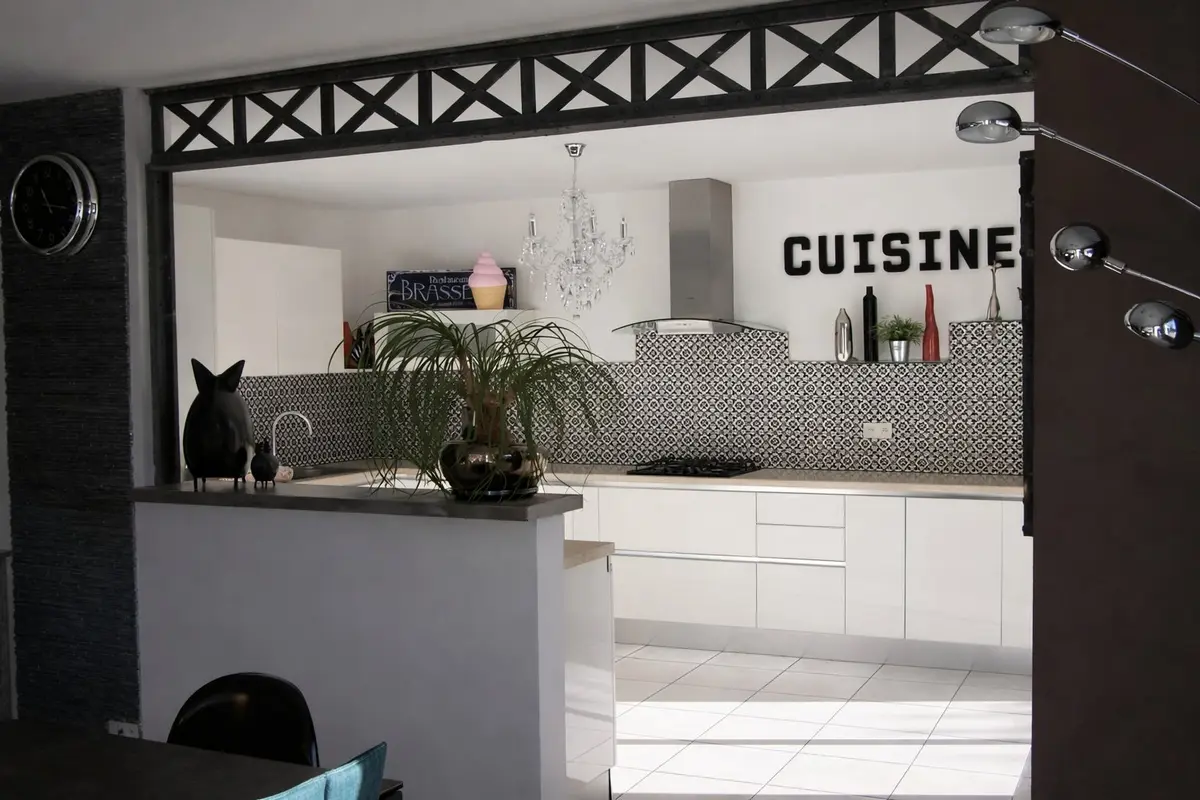
Many apartments have no defined entrance, you step straight into the living room. An interior glass partition creates an entry area without walling off the space or darkening it. The slender profile of the metal-effect wood uprights takes up less room than a traditional partition and allows light to flow freely throughout.
Home office / workspace
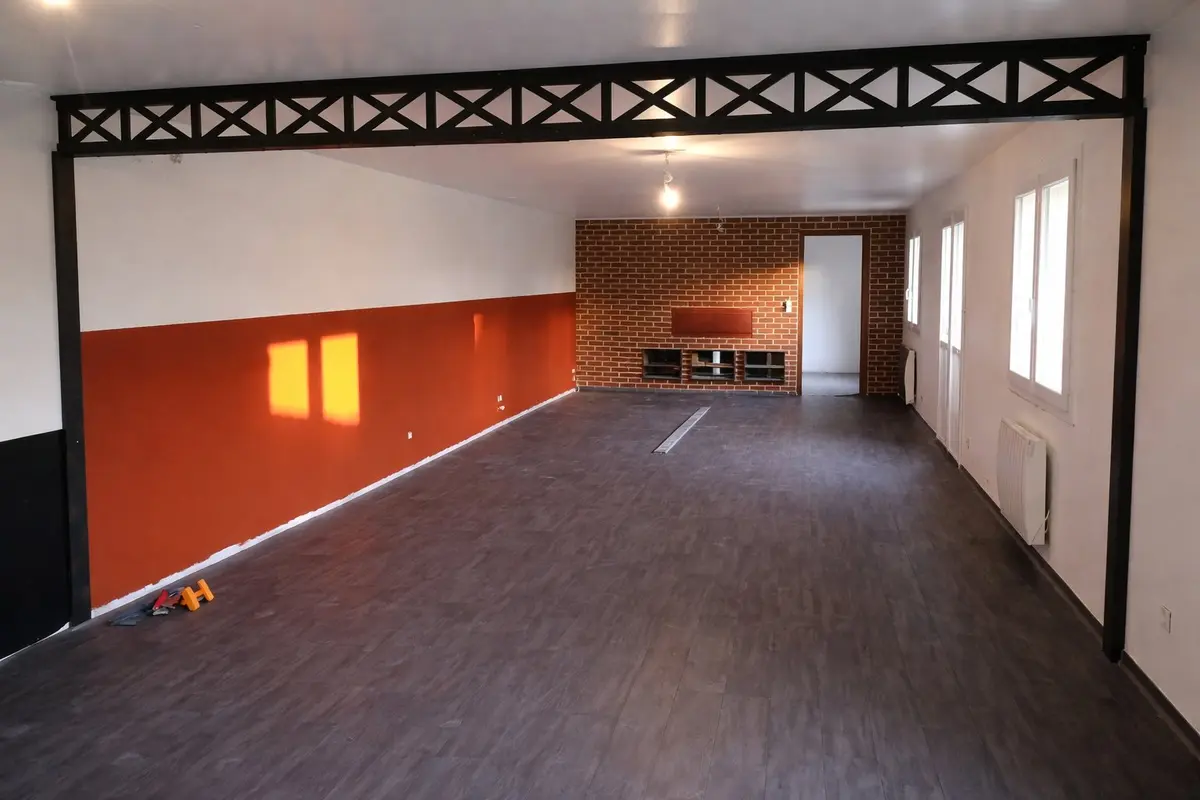
With remote working now the norm, carving out a dedicated office area within a living room or bedroom has become a common need. A glass partition provides visual separation and a degree of acoustic attenuation while keeping the space open and well lit. An office framed by an industrial-style partition has a character that no plasterboard wall can match.
Bedroom / bathroom
In lofts and large open-plan spaces, a glass partition between the bedroom and bathroom is an elegant architectural solution. It creates the feel of a hotel suite while bringing natural light into a bathroom that would otherwise have none. For this application, opt for frosted or sandblasted glass on the lower section for privacy, and clear glass above for light.
Customisation options
Number of panes. From 2 panes for a narrow partition to 6, 8 or more for a panoramic run. The number of panes and the proportion of the framing determine the overall look: fewer panes with wider uprights give a robust, raw feel; more panes with slimmer uprights create a lighter, more contemporary result.
The sliding door. Adding an industrial-style sliding door turns the partition into a functional passageway. The door runs on an exposed overhead rail (itself in wood with a metal effect), the visible mechanism is part of the industrial aesthetic. Our sliding doors are light and smooth-running thanks to the reduced weight of the wood.
The transom. A horizontal bar across the upper third of the partition recalls the windows of an artist's studio. It is an architectural detail that dramatically reinforces the industrial character of the piece and is often its most recognisable element.
The finish. Raw steel for a contemporary look. Corten rust for warmth. Weathered zinc for softness. Cast iron for historical character. Matte black for a clean, minimal result. Each finish transforms the atmosphere entirely, and unlike genuine steel (generally painted black and nothing else), wood opens up this full palette of options.
Your bespoke interior glass partition
Send us the dimensions of your opening (width, height), the type of rooms you want to separate, the finish that appeals to you and whether you would like a sliding door. A few photographs of your space help us suggest the partition style that will work best.
We respond within three working days with a detailed quote, a sketch of the partition and finish recommendations.
Discover our made-to-measure industrial-style glazed partitions.